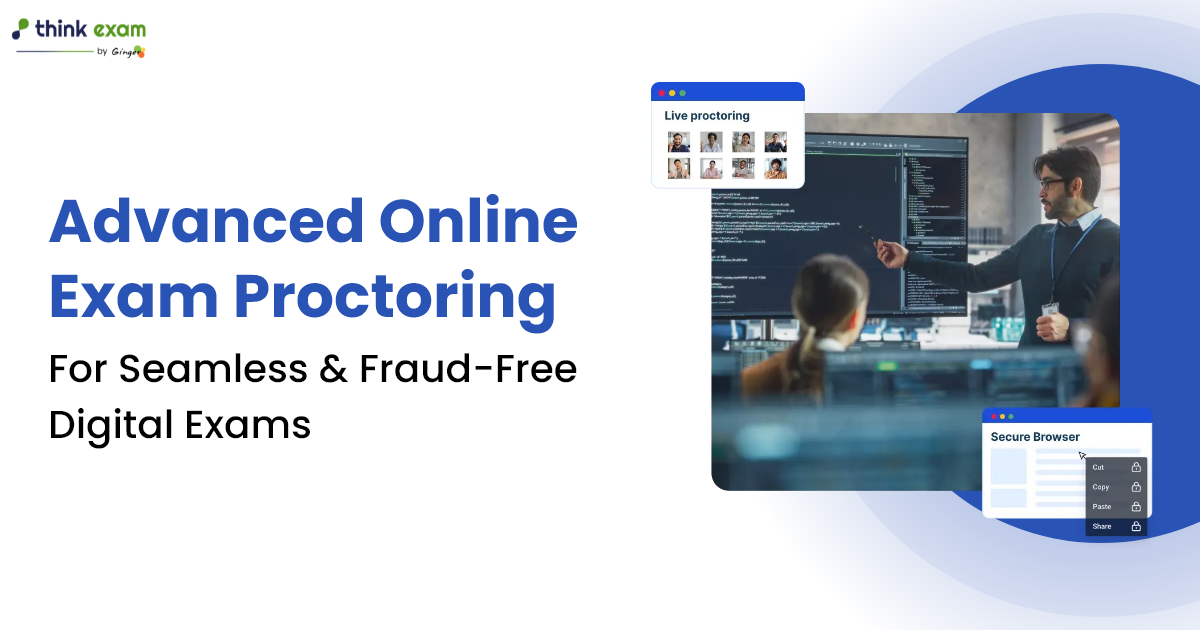
As digital assessments become the backbone of modern education and recruitment, the conversation is no longer just about conducting exams online, it’s about ensuring trust, authenticity, and control in a virtual environment.
Organizations today are not just looking for basic monitoring tools; they need advanced online exam proctoring systems that can intelligently detect risk, adapt to candidate behavior, and maintain the credibility of high-stakes evaluations.
With the rapid adoption of online assessment platforms, digital hiring tools, and remote certification systems, the challenge has shifted from accessibility to exam integrity at scale. This is where next-generation AI-powered proctoring solutions are redefining how exams are conducted—making them not only seamless but also fraud-resistant.
Let’s explore how advanced proctoring is transforming digital exams beyond just surveillance.
1. Moving Beyond Monitoring to Intelligent Behavior Analysis
Traditional proctoring methods, whether in-person or basic webcam monitoring, focus primarily on observation. However, modern online exam proctoring systems go a step further by analyzing candidate behavior patterns rather than just recording activity.
Why this shift matters
Simple monitoring can miss subtle forms of malpractice. Candidates today are more aware of surveillance methods and may attempt sophisticated ways to bypass them.
Organizations need systems that can:
- Interpret behavior, not just capture it
- Identify intent, not just actions
- Detect patterns across the entire exam session
How advanced proctoring addresses this
AI-driven systems now evaluate:
- Eye movement consistency
- Head position and attention tracking
- Interaction patterns with the screen
What sets this approach apart
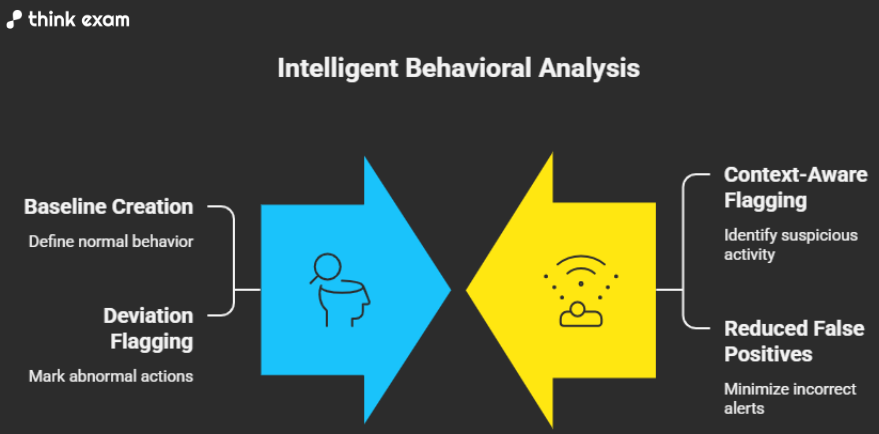
- Behavioral baseline creation
The system establishes a “normal behavior pattern” for each candidate at the start of the exam and flags deviations from it. - Context-aware flagging
Instead of flagging every movement, intelligent systems differentiate between natural behavior and suspicious activity. - Reduced false positives
By focusing on patterns rather than isolated incidents, the system avoids unnecessary interruptions or incorrect flagging.
2. Building Trust in High-Stakes Digital Exams
In digital environments, trust is everything. Whether it’s a university exam, a certification test, or a hiring assessment, stakeholders need confidence that results are genuine.
The trust challenge
Without proper proctoring:
- Candidates may question fairness
- Organizations risk reputational damage
- Certifications may lose credibility
Role of advanced proctoring
Modern remote proctoring solutions are designed to create a transparent and verifiable testing environment.
Where it adds real value
- Identity authentication layers
From ID verification to behavioral analysis and facial recognition, systems ensure that the right individual is taking the test. - Session traceability
Every action during the exam is recorded and can be reviewed if needed. - Transparent reporting
Detailed reports provide clarity on candidate behavior, ensuring confidence in the final outcome.
3. Seamless Candidate Experience Without Compromising Control
A common misconception is that stronger security leads to a poorer user experience. However, modern online exam proctoring systems are designed to balance both.
Why experience matters
A complicated or intrusive system can:
- Increase candidate anxiety
- Lead to technical issues
- Impact performance negatively
How advanced systems improve usability
- Streamlined onboarding processes
- Pre-exam system compatibility checks
- Minimal interruptions during the test
Designed for real-world usability
- Guided exam setup
Candidates receive step-by-step instructions, ensuring they are fully prepared before the exam begins. - Adaptive system performance
Platforms are optimized to function across varying internet speeds and devices. - Non-intrusive monitoring
AI operates in the background, reducing the need for constant human intervention.
4. Multi-Dimensional Fraud Prevention Strategies
Cheating in online exams is no longer limited to simple tactics. Candidates may attempt:
- Using secondary devices
- Collaborating with others
- Accessing hidden resources
Why single-layer security is not enough
Relying on just one method leaves gaps that can be exploited.
How advanced proctoring solves this
Modern systems use a multi-layered security approach combining different technologies that make breaching security difficult.
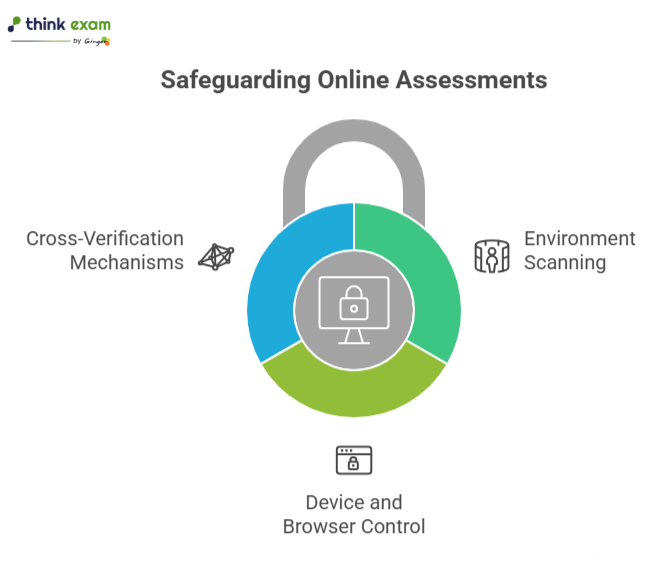
Core safeguards in action
- Environment scanning
Candidates may be required to scan their surroundings to ensure a secure setup. - Device and browser control
Restricted environments prevent access to unauthorized applications or websites. - Cross-verification mechanisms
Multiple data points (video, audio, screen activity) are analyzed together.
5. Real-Time Decision Intelligence for Administrators
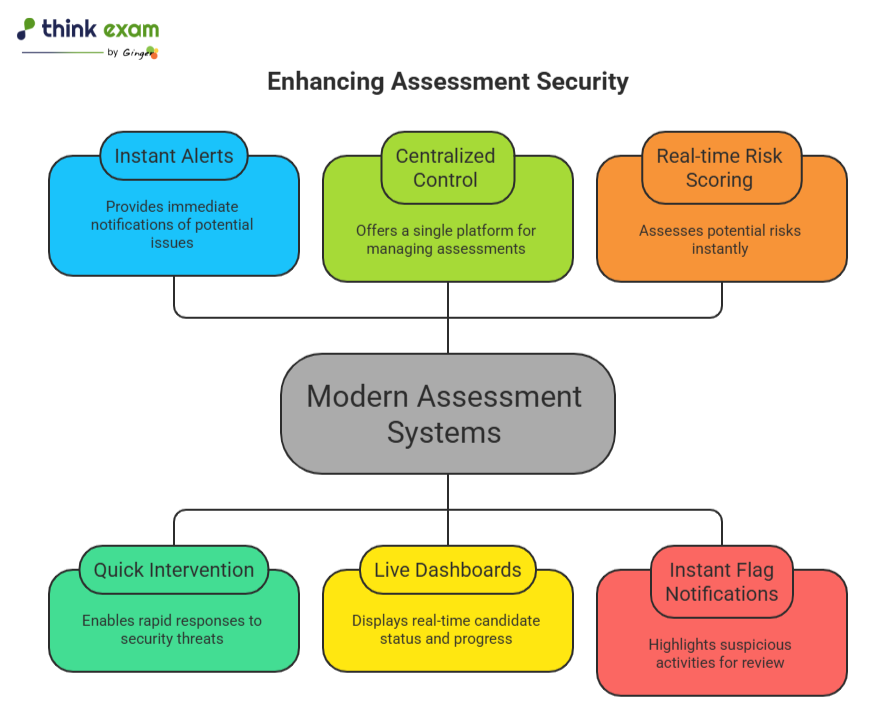
Advanced proctoring is not just about monitoring candidates it also empowers administrators with real-time insights and control.
What makes it powerful
- Priority-based alert systems
Flags are categorized based on severity, helping focus on critical cases. - Centralized monitoring dashboards
Multiple candidates can be tracked from a single interface. - Quick response capabilities
Admins can take immediate action when needed.
6. Audit-Ready Systems for Compliance and Accountability
For organizations conducting high-stakes exams, compliance is essential.
Why compliance matters
- Ensures credibility
- Meets regulatory standards
- Protects reputation
How proctoring supports compliance
Advanced systems provide complete audit trails and documentation.
Built for accountability
- Detailed session recordings
All exam sessions are recorded for review. - Action logs and event tracking
Every flagged activity is documented with timestamps. - Secure data handling
Candidate data is protected through encryption and controlled access.
7. Scalability Without Losing Control or Quality
As organizations grow, their assessment needs to scale rapidly.
The scalability challenge
- Managing large volumes
- Maintaining consistent monitoring
- Avoiding system failures
How advanced proctoring enables scale
- Cloud-based infrastructure
- Automated monitoring
- Optimized system performance
Engineered for scale
- High concurrency support
Thousands of candidates can be monitored simultaneously. - Consistent evaluation standards
Every candidate is assessed under the same conditions. - Efficient resource utilization
Automation reduces reliance on large teams.
In Conclusion
Advanced online exam proctoring is no longer just a support feature—it is a critical foundation of secure digital assessments.
By moving beyond basic monitoring to intelligent behavior analysis, multi-layered security, and real-time decision systems, modern proctoring solutions are redefining how organizations approach exam integrity.
As the adoption of online assessment platforms and digital testing solutions continues to grow, investing in advanced proctoring is essential to:
- Maintain trust and credibility
- Prevent fraud effectively
- Deliver seamless exam experiences
In a digital-first world, security, intelligence, and scalability must work together—and advanced proctoring makes that possible.