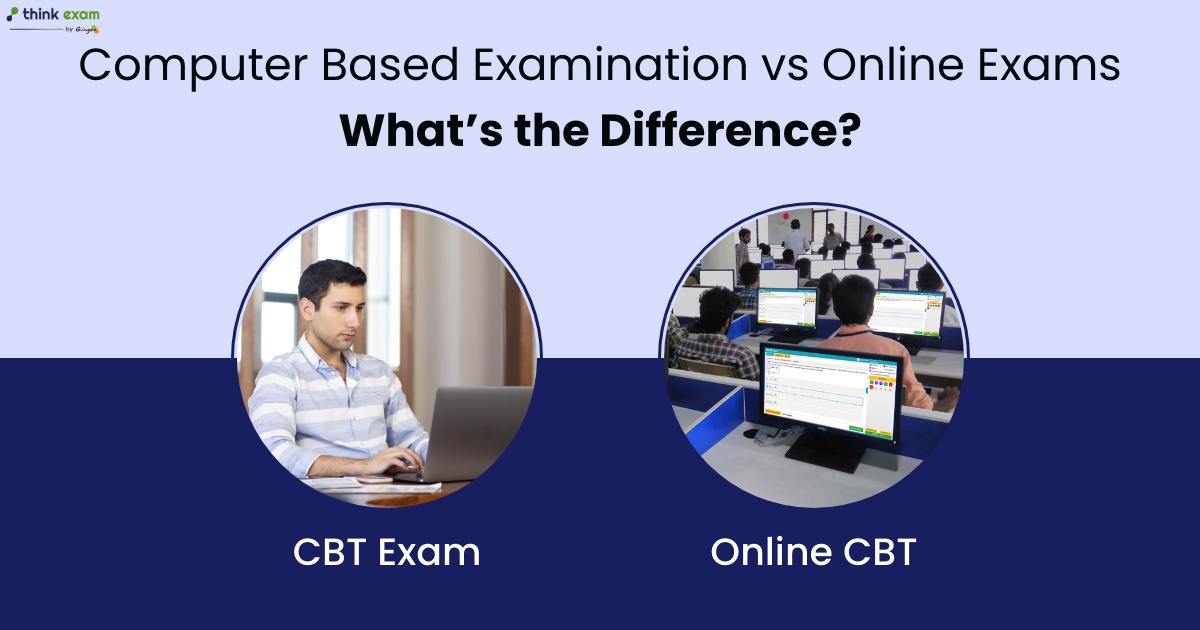
Understanding Computer-Based Exams (CBT)
A computer-based exam (CBT) is a test conducted on a computer within a controlled environment, typically at a designated test center.Key Features of CBT
- Conducted at authorised exam centres
- Standardised systems and infrastructure
- Physical or centre-based invigilation
- Fixed schedule and limited flexibility
Common Use Cases
- Government recruitment exams
- Banking and insurance tests
- National-level entrance examinations
Why Organisations Prefer CBT
CBT offers a high level of standardisation and control, ensuring that every candidate is assessed under the same conditions. This makes it ideal for high-stakes and large-scale examinations.Understanding Online Exams
Online exams are assessments conducted over the internet, allowing candidates to take tests remotely using their own devices.Key Features of Online Exams
- Accessible from any location
- Flexible scheduling options
- AI-based or remote proctoring
- Compatible with multiple devices
Common Use Cases
- Corporate hiring and remote recruitment
- University internal assessments
- Certification and skill-based testing
Why Online Exams Are Gaining Popularity
Online exams provide unmatched flexibility and scalability, enabling organisations to reach candidates across geographies and logistical constraints.Key Differences Between Computer Based Exams and Online Exams
While both formats are digital, their approach differs significantly:1. Testing Environment
- CBT: Conducted in a controlled test centre
- Online Exams: Conducted remotely from any location
2. Flexibility
- CBT: Fixed schedule and location
- Online Exams: Flexible timing and access
3. Infrastructure
- CBT: Requires physical infrastructure and setup
- Online Exams: Relies on internet connectivity and digital platforms
4. Security Approach
- CBT: Physical invigilation and controlled systems
- Online Exams: AI proctoring, secure browsers, and behavioral monitoring
5. Candidate Experience
- CBT: Formal, standardized, and high-pressure
- Online Exams: Convenient, accessible, and user-friendly
The Emerging Hybrid Model: Bridging CBT and Online Exams
The assessment landscape is evolving beyond a binary choice. Modern platforms are combining the strengths of both computer based exams and online exams to create hybrid solutions.What Does This Look Like?
- Remote exams with secure, lockdown browsers
- AI-driven proctoring that mimics in-person invigilation
- Real-time monitoring and analytics
Why This Matters
This hybrid approach delivers:- The security of CBT
- The flexibility of online exams
Choosing the Right Format for Your Needs
Selecting between CBT and online exams depends on your assessment objectives.Choose Computer Based Exams (CBT) If You Need:
- High-stakes exam security
- Standardized testing conditions
- Regulatory or compliance-driven assessments
Choose Online Exams If You Need:
- Remote accessibility
- Faster deployment and scalability
- Cost-effective assessment solutions
How the Shift Is Playing Out in Real-World Use
If you look closely at how assessments are being conducted today, a pattern starts to emerge. For high-stakes scenarios, like large-scale entrance tests or government hiring, computer based exams (CBT) continue to be the preferred choice. The need for strict control, uniform environments, and zero room for discrepancies makes CBT a dependable format. At the same time, in environments where speed, accessibility, and scale matter more, such as corporate hiring or skill-based certifications, online exams are becoming the default. Organizations no longer want candidates to travel just to prove their skills, especially when roles themselves are remote or hybrid. What’s interesting is that this isn’t a shift from one format to another. It’s a shift in how organizations think about assessments. Instead of asking, “Which is better?” the question is increasingly becoming: “Which format fits this specific use case?” And that’s exactly why both models continue to coexist—and evolve.Frequently Asked Questions (FAQs)
1. Are computer based exams and online exams the same?
No. While both are digital, computer based exams (CBT) are conducted in controlled test centers, whereas online exams are taken remotely over the internet.
2. Which is more secure: CBT or online exams?
CBT is traditionally more secure due to physical invigilation. However, modern online exams use advanced AI proctoring and secure browsers, making them increasingly reliable.
3. Can online exams replace computer based exams?
Not entirely. High-stakes exams may still require CBT, but online exams are rapidly expanding in areas like hiring, certifications, and education.
4. What is a hybrid assessment model?
A hybrid model combines elements of both CBT and online exams, offering remote access with enhanced security features like AI monitoring and lockdown browsers.
6. Do online exams require special software?
Many online exams use secure exam browsers or platforms with built-in proctoring features to ensure integrity and prevent malpractice.