A student can solve hundreds of questions, score well in mock tests, and know the syllabus inside out. But when the real exam begins, performance can still drop.
Why?
Because knowing the subject and being comfortable with the exam environment are not always the same thing.
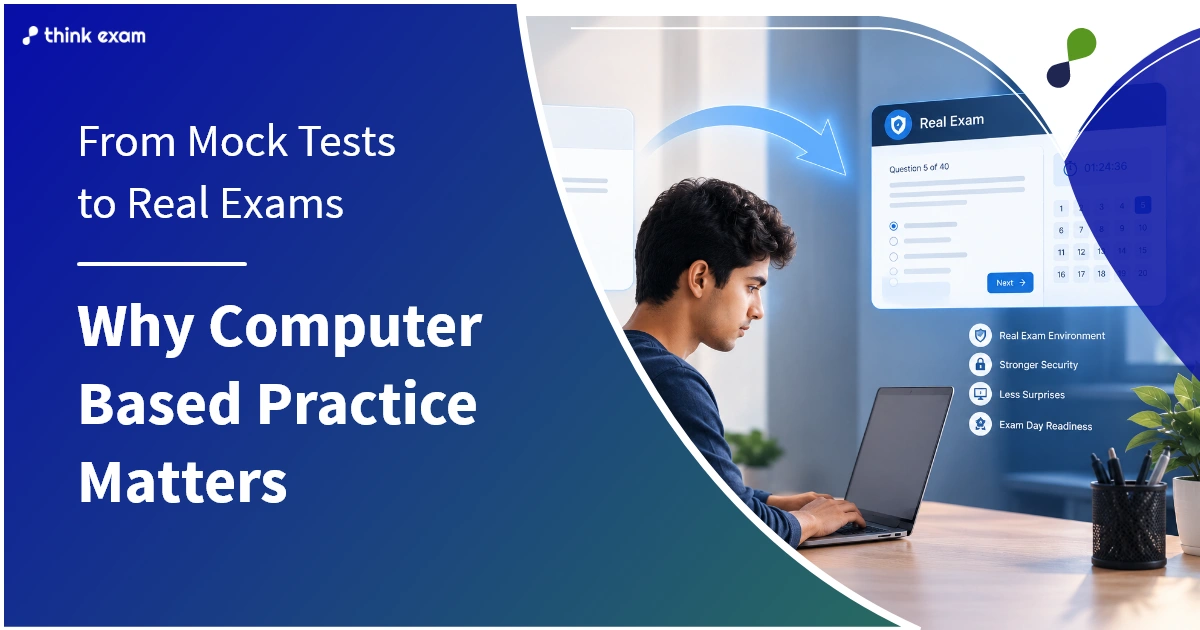
For many students, mock tests are mainly about checking knowledge and tracking scores. But when the actual examination is conducted digitally, preparation also needs to include familiarity with the testing environment.
A computer based test is not just a paper exam displayed on a screen. It changes how students read questions, manage time, navigate between sections, review answers, and make decisions under pressure.
This is why computer-based practice matters long before the real examination day.
Mock Test Scores Don’t Always Tell the Full Story
A good mock test score usually shows that a student understands the subject and can answer questions correctly.
But it may not show whether the student is comfortable with the actual exam environment.
For example, a student who regularly takes paper-based tests may be used to:
- Flipping between pages
- Underlining important information
- Writing notes beside questions
- Scanning the entire paper quickly
- Managing a physical answer sheet
A computer based examination creates a different experience.
Students need to read from a screen, use digital navigation, monitor an on-screen timer, and manage questions through the available test interface.
These may sound like small changes, but during a high-pressure examination, unfamiliarity can affect performance.
The Real Exam Shouldn’t Be the First Computer Based Test
One of the biggest mistakes students can make is waiting until the actual exam to experience the digital format.
The first few minutes of a CBT online test can involve adjusting to the interface:
Where is the question palette?
How do I mark a question for review?
Can I change my answer later?
How much time is left?
How do I move between sections?
These questions should already have answers before the real examination begins.
Regular computer-based practice helps students become familiar with the environment until the technology itself no longer requires conscious attention.
The goal is simple:
Students should spend exam time solving questions, not figuring out the interface.
CBT Practice Builds a Different Kind of Exam Readiness
Academic preparation builds subject knowledge.
A computer based test builds exam-environment familiarity.
Both are important.
Regular CBT practice can help students improve:
Screen-Based Reading
Reading questions on a screen can feel different from reading a printed page. Students need to become comfortable processing information digitally, especially during long examinations.
Digital Navigation
Students learn how to move between questions efficiently without losing concentration.
Time Management
An on-screen timer creates a different rhythm. Students need to make quick decisions about when to answer, skip, or revisit a question.
Question Review
Mark-for-review features allow students to return to difficult questions later. But this strategy needs practice.
Exam Stamina
Sitting in front of a screen for a full-length examination requires concentration and familiarity.
A student may be academically ready but still need time to develop these habits.
What Does CBT Mode Mean for Students?
When people search for “CBT mode means,” they often focus on the technical definition of computer-based testing.
But from a student’s perspective, CBT means something more practical.
It means interacting with the examination through a digital interface instead of a physical question paper.
The questions may remain equally challenging. The syllabus may remain the same. But the way students interact with the exam changes.
This is why the CBT mode of exam should be treated as part of the preparation strategy, not simply as an administrative change.
Students need opportunities to practise in conditions similar to those they may experience on exam day.
Why NEET CBT Practice Is Becoming an Important Conversation
For competitive examinations such as NEET, students spend months or even years preparing for a high-pressure testing experience.
Currently, preparation methods are often closely linked to the official examination format. If an examination is conducted using OMR sheets, OMR practice naturally remains important.
However, the growing discussion around NEET CBT has also highlighted a broader point: students should be adaptable to changes in examination delivery.
The purpose of NEET CBT practice is not to replace preparation based on the current official exam format.
It is to help students and coaching institutes build familiarity with digital testing environments as computer-based examinations become more common across the assessment ecosystem.
A student who has experience with both paper-based and digital testing may be better prepared to adapt when examination formats evolve.
A Good CBT Test Should Feel Different From a Simple Online Quiz
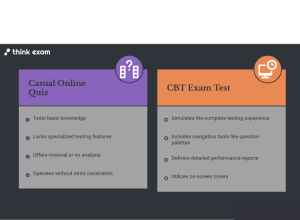
Not every online quiz can prepare students for a real examination.
A casual quiz may test knowledge, but a realistic CBT exam test should prepare students for the complete testing experience.
A useful computer-based mock should include:
- Realistic exam duration
- Clear question navigation
- On-screen timers
- Question palettes
- Mark-for-review options
- Section-wise movement
- Answer modification
- Automatic submission
- Detailed performance reports
The purpose is to create familiarity with the testing workflow.
This is where a reliable CBT Platform becomes important for coaching institutes and educational organisations.
The platform should help recreate the experience students need to practice, not simply provide a digital place to upload questions.
Practice Helps Students Build Better Exam Strategies
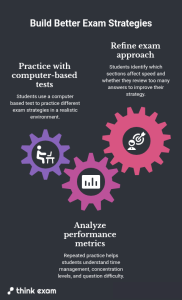
Every student approaches an exam differently.
Some prefer answering easy questions first. Others work sequentially. Some skip difficult questions and return later.
A computer based test allows students to test these strategies in a realistic environment.
After repeated practice, they can understand:
- Which approach saves time
- When they lose concentration
- How long they spend on difficult questions
- Whether they review too many answers
- Which sections affect their overall speed
This is one reason digital practice can provide value beyond a final score.
Students are not only learning the subject. They are learning how they perform under exam conditions.
Online Exam Analytics Can Make Mock Tests More Useful
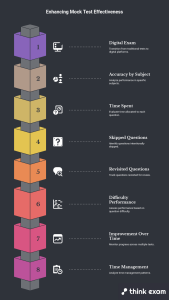
Traditional mock tests often end with a score and a list of correct answers.
A digital online exam can provide a deeper view of performance.
Depending on the platform, students and faculty may be able to review:
- Accuracy by subject
- Time spent on questions
- Questions skipped
- Questions revisited
- Difficulty-wise performance
- Improvement across multiple tests
- Time-management patterns
For example, two students may score the same marks.
But one may finish comfortably within the time limit, while another may rush through the final section.
The score may look identical, but their exam readiness is different.
Coaching Institutes Need to Move Beyond Occasional CBT Mocks
For coaching institutes, the value of computer-based practice increases when it becomes part of the preparation journey.
Conducting one CBT test a month may introduce students to the format, but repeated exposure creates familiarity.
Institutes can gradually include:
- Chapter-wise computer-based tests
- Weekly digital practice sessions
- Subject-wise timed tests
- Full-length CBT mocks
- Final-stage simulated examinations
This approach allows students to transition naturally.
Faculty can also use performance data to identify students who understand the syllabus but struggle with speed, navigation, or digital exam management.
Paper Practice and CBT Practice Can Work Together
The conversation should not be about replacing one format with another.
Paper-based practice still has value.
Students may prefer solving rough calculations on paper or working through complex problems physically. Likewise, OMR practice remains relevant when the official examination requires it.
The stronger approach is to combine both methods where appropriate.
Paper practice builds academic problem-solving habits.
Computer-based practice builds digital exam readiness.
Together, they can prepare students for both the questions and the environment in which they will answer them.
From Practice Scores to Real Exam Performance
The purpose of a mock test is not simply to predict a score.
Its bigger purpose is to reduce uncertainty.
A good mock should help students understand what the real exam may feel like and identify problems before the actual examination day.
A computer based examination adds another layer to that preparation.
Students need to know how to manage their time, navigate questions, review answers, and maintain focus within a digital environment.
The more familiar these processes become during practice, the less attention they demand during the real exam.
Make the Exam Environment Part of the Preparation
Students spend months preparing for difficult questions.
They should not spend the first few minutes of a real exam adjusting to the screen.
Regular computer based test practice helps turn unfamiliar actions into routine ones. Navigation becomes automatic. Timers become familiar. Question review becomes part of the student’s strategy.
For coaching institutes, schools, and examination providers, this is an important shift in how mock tests are viewed.
A mock test should not only ask:
“How much does the student know?”
It should also help answer:
“How well can the student perform in the real testing environment?”
That is the difference between practising for a test and preparing for the actual exam.