The education and assessment landscape in the Middle East is undergoing a significant transformation. From traditional pen-and-paper exams to AI-driven digital evaluations, institutions and organisations across the MENA region are rapidly shifting toward online examination systems.
Online assessments are no longer an option; they are becoming the first choice for modern evaluations. This has been possible by government programs, more people using the internet, and a strong push toward digital transformation.
In fact, the Middle East e-learning market is projected to reach USD 28 billion by 2034, highlighting the rapid adoption of digital education and assessment technologies. (IMARC Group)
So, what’s fueling this shift? Let’s explore.
1. Rapid Digital Transformation Across the MENA Region
The Middle East, especially countries like the UAE and Saudi Arabia, is investing heavily in smart education and digital infrastructure.
Why it matters:
- Governments are prioritising Vision 2030 initiatives (Saudi Arabia) and the UAE digital strategies
- Institutions are adopting Learning Management Systems (LMS) and online testing platforms
- High-speed internet and mobile accessibility are now widely available
Digital assessments are now very easy to access in places like the UAE and Qatar, where internet use is as high as 95%. (DigitalDefynd Education)
Impact on online exams:
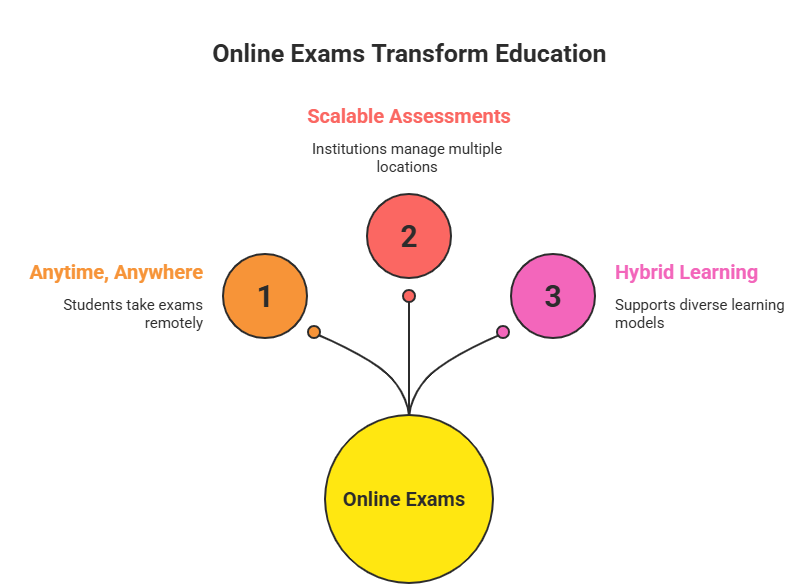
- Exams can be conducted anytime, anywhere
- Institutions can scale assessments across multiple locations
- Remote and hybrid learning ecosystems are supported
2. Flexibility and Accessibility for a Diverse Population
The MENA region has a young, tech-savvy population, along with a growing workforce seeking upskilling opportunities.
Key benefits:
- Candidates can take exams from home or remote locations
- Working professionals can schedule assessments conveniently
- Eliminates geographical and cultural barriers
Online exams enable learners to study and test at their own pace, improving work-life balance and participation rates. (Business Market Insights)
Regional relevance:
This is particularly important in regions where:
- Travel constraints exist
- Cultural norms may limit physical attendance
- Cross-border education is increasing
3. Cost-Effective and Scalable Assessment Model
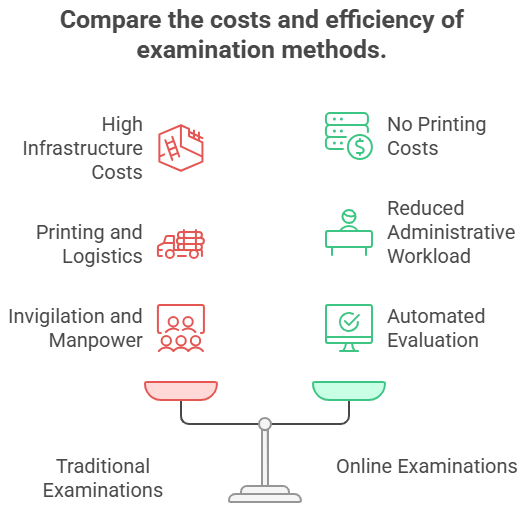
Traditional examinations involve high costs:
- Physical infrastructure
- Printing and logistics
- Invigilation and manpower
Online examination platforms eliminate these overheads.
Cost advantages:
- No printing or paper costs
- Reduced administrative workload
- Automated evaluation saves time and resources
Additionally, organisations can conduct large-scale recruitment tests or certification exams without logistical challenges.
4. Enhanced Security with AI Proctoring
One of the biggest concerns with online exams, cheating, has been addressed through AI-powered proctoring technologies.
Key security features:
- Live + AI remote proctoring
- Facial recognition and ID verification
- Browser lockdown systems
- Suspicious behavior detection
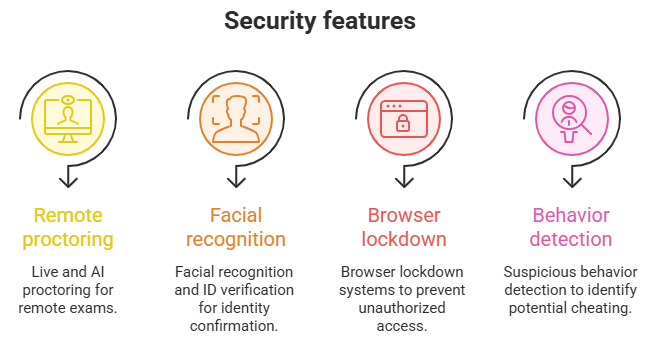
With advancements in AI and cloud technology, online exams are now more secure and reliable than traditional methods.
Why this matters in MENA:
As online learning grows, maintaining exam integrity and credibility is critical for:
- Universities
- Government certification bodies
- Corporate hiring assessments
5. Data-Driven Insights and Performance Analytics
Online examination systems provide real-time analytics and performance tracking, a feature that traditional exams cannot match.
What institutions gain:
- Detailed candidate performance reports
- Skill gap analysis
- Centralised student database
In fact, institutions in the MENA region are increasingly adopting systems that allow centralised tracking of student performance and records, improving decision-making and educational outcomes. (The Insight Partners)
6. Growing Demand for Skill-Based and Corporate Assessments
The Middle East job market is shifting toward skill-based hiring, especially in sectors like:
- IT and digital transformation
- Healthcare
- Renewable energy
- E-commerce
Role of online exams:
- Enables remote hiring assessments
- Supports continuous employee upskilling
- Allows standardised evaluation across regions
This aligns with the region’s focus on economic diversification and workforce readiness.
7. Government and EdTech Investment Boom
The MENA region is witnessing a surge in EdTech investments and innovation.
- EdTech funding in the region increased by 169% in early 2025 (DigitalDefynd Education)
- Governments are actively supporting digital education initiatives
- Universities are adopting hybrid and fully online models
What this means:
Online examinations are becoming a standard component of modern education systems, not just a temporary solution.
8. Overcoming Traditional Barriers in Education
Online assessments help address several long-standing challenges in the Middle East:
Key challenges solved:
- Limited access to quality education in remote areas
- Gender-based or cultural restrictions on physical attendance
- Infrastructure limitations
E-learning and online exams allow students to participate more confidently and conveniently, improving engagement and inclusivity. (ScienceDirect)
The Final Takeaway:
The rise of online examinations in the Middle East is not just a trend, it is a strategic shift driven by technology, accessibility, and evolving educational needs.
From government-backed digital initiatives to AI-powered proctoring and data-driven insights, online exams offer a scalable, secure, and future-ready assessment solution.
As the MENA region continues its digital transformation journey, online examination platforms will play a critical role in shaping the future of:
- Education
- Recruitment
- Skill development
Simply put, modern assessments demand modern solutions, and online examinations are leading the way.
FAQs
1. Why are online exams popular in the Middle East?
Online exams are gaining popularity due to high internet penetration, government digital initiatives, and demand for flexible learning solutions.
2. Are online exams secure?
Yes, modern platforms use AI proctoring, facial recognition, and browser lockdown features to ensure exam integrity.
3. How do online exams benefit institutions?
They reduce costs, improve scalability, and provide real-time performance analytics.
4. Can online exams replace traditional exams completely?
While traditional exams still exist, online exams are rapidly becoming the preferred choice for modern assessments, especially in corporate and higher education sectors.
5. What industries use online assessments in MENA?
Online exams are widely used in:
- Education
- Corporate hiring
- Government certifications
- Professional training programs