Hiring in 2026 is no longer just about reviewing resumes or conducting face-to-face interviews. Companies are increasingly adopting online assessment platforms to make smarter, faster, and more data-driven hiring decisions.
As businesses expand and competition for skilled talent intensifies, especially in digitally advancing economies, organisations are under pressure to build efficient, scalable, and unbiased recruitment processes. This has led to a significant rise in the adoption of online assessment software, AI-powered hiring tools, and remote recruitment platforms.
Across industries, companies are leveraging GCC hiring platforms, UAE recruitment software, and Saudi digital hiring solutions to streamline their talent acquisition strategies. The focus has shifted toward identifying candidates based on real skills rather than just qualifications.
So, what is driving this shift toward online assessments in 2026? Let’s explore in detail.
1. Shift Toward Skill-Based Hiring and Job-Ready Talent
One of the primary reasons companies are adopting online assessment platforms is the growing emphasis on skill-based hiring.
Traditional hiring methods often fail to measure whether a candidate can actually perform the tasks required for a role. Degrees and resumes provide limited insight into practical capabilities, which can lead to poor hiring decisions.
Why this shift is important
Organisations today need to:
- Evaluate real-world skills instead of theoretical knowledge
- Hire candidates who are job-ready from day one
- Align hiring with evolving industry requirements
In regions where workforce development and employment initiatives are gaining momentum, companies are focusing on hiring candidates who can contribute immediately.
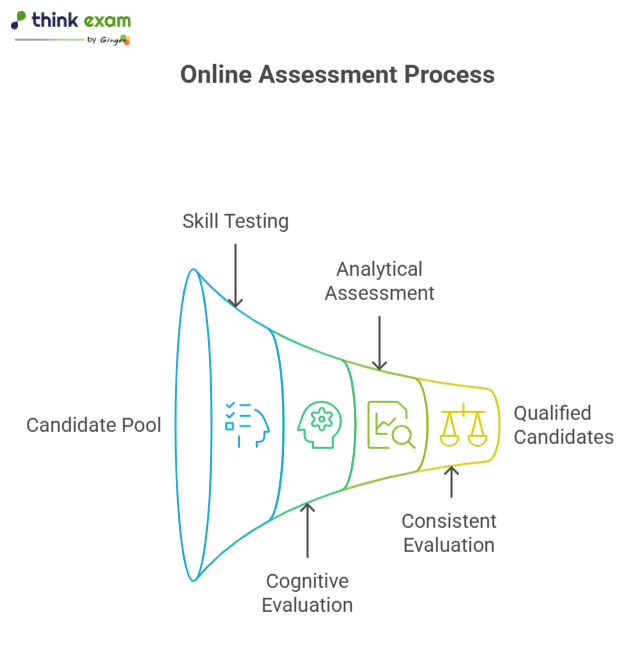
And to achieve them, companies need the following:
- Real-world skill evaluation
Companies can design assessments tailored to specific roles, such as coding tests, case studies, or situational judgment tests. This ensures candidates are evaluated based on actual job performance. - Standardized testing process
With online assessment software, all candidates go through the same evaluation process, ensuring fairness and consistency. - Improved hiring accuracy
By focusing on skills rather than credentials, companies reduce hiring errors and improve long-term employee performance.
2. Growth of Digital Hiring and Remote Recruitment
The rise of remote work has transformed how companies approach hiring. Organizations are increasingly adopting digital recruitment strategies to access a wider talent pool.
Challenges with traditional hiring
- Limited to local candidates
- Time-consuming scheduling
- High logistical costs
Role of online assessment platforms
Online assessments enable:
- Remote candidate evaluation
- Flexible scheduling across time zones
- Faster hiring processes
And to achieve them, companies need:
- Access to broader talent pools
Companies can use GCC hiring platforms and UAE recruitment software to assess candidates across regions without requiring physical presence. - Faster recruitment cycles
Digital assessments significantly reduce time-to-hire, which is crucial in competitive job markets. - Seamless integration with virtual hiring tools
Online assessment platforms integrate with video interviews and applicant tracking systems, creating a fully digital hiring ecosystem.
3. Need for Scalable High-Volume Hiring Solutions
Organizations often receive thousands of applications for a single role, especially during large-scale hiring drives.
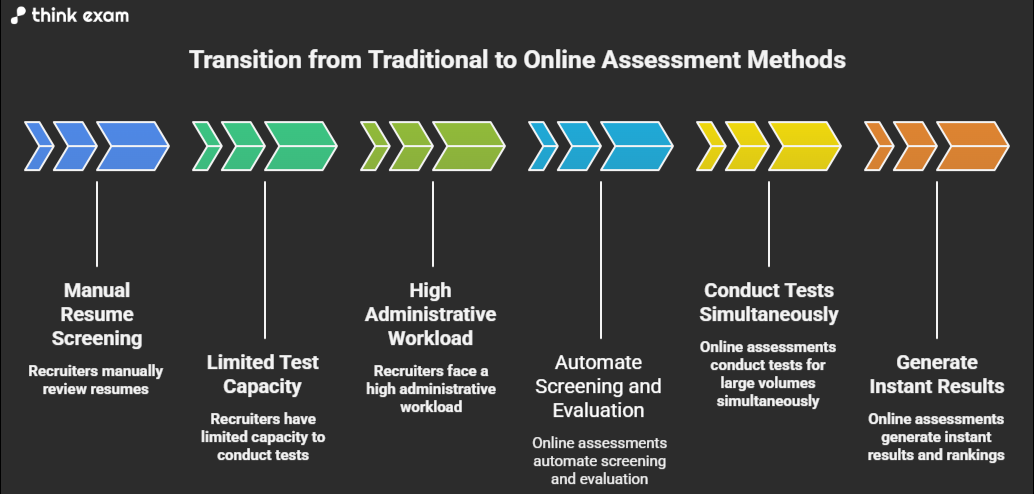
- Bulk assessment capabilities
Companies can evaluate thousands of candidates in a single day using scalable online assessment platforms. - Automated shortlisting
AI-powered systems filter top candidates based on predefined criteria, saving time and effort. - Consistent evaluation at scale
Standardized assessments ensure fairness and accuracy across all candidates.
4. Enhanced Security Through AI-Powered Proctoring
Security has always been a major concern in online hiring assessments. However, advancements in AI-based proctoring have made online exams highly secure.
Key features
- AI and live remote proctoring
- Facial recognition and identity verification
- Browser lockdown systems
- Behavioral monitoring
Why this matters
Companies need to ensure:
- Authentic candidate participation
- Prevention of cheating or impersonation
- Reliable hiring outcomes
And to achieve them, companies need:
- Real-time monitoring
AI continuously tracks candidate behavior and flags suspicious activities during assessments. - Automated integrity checks
Systems detect anomalies such as multiple faces or unusual movements. - Secure testing environment
Browser restrictions prevent candidates from accessing unauthorized resources.
This is especially important for companies conducting secure online hiring assessments across GCC and MENA markets, where credibility is critical.
5. Data-Driven Hiring and Advanced Analytics
Modern hiring decisions are increasingly based on data rather than intuition. Online assessment platforms provide detailed insights into candidate performance.
What companies can analyze
- Performance metrics
- Skill-level comparisons
- Time spent per question
- Behavioral patterns
Why this is valuable
Data-driven insights help companies:
- Identify top-performing candidates
- Reduce hiring bias
- Improve recruitment strategies
And to achieve them, companies need:
- Predictive hiring insights
Analytics can help predict a candidate’s future performance based on test results. - Skill gap identification
Companies can identify areas where candidates need improvement, useful for onboarding and training. - Continuous improvement of hiring processes
Recruiters can refine assessments over time to improve accuracy.
This is why UAE recruitment software and GCC hiring platforms are increasingly focusing on analytics-driven hiring.
6. Cost Efficiency and Operational Benefits
Traditional hiring processes can be expensive and resource-intensive.
Common cost factors
- Physical test centers
- Travel and logistics
- Printed materials
- Manual invigilation
Benefits of online assessment software
- Eliminates infrastructure costs
- Automates evaluation and reporting
- Reduces administrative workload
And to achieve them, companies need the following:
- Lower cost per hire
Organizations can significantly reduce expenses, especially for large-scale hiring. - Faster return on investment
Automation leads to quicker hiring decisions and improved efficiency. - Better resource utilization
HR teams can focus on strategic tasks instead of manual processes.
7. Alignment with Digital Transformation Goals
Companies are aligning their hiring processes with broader digital transformation strategies.
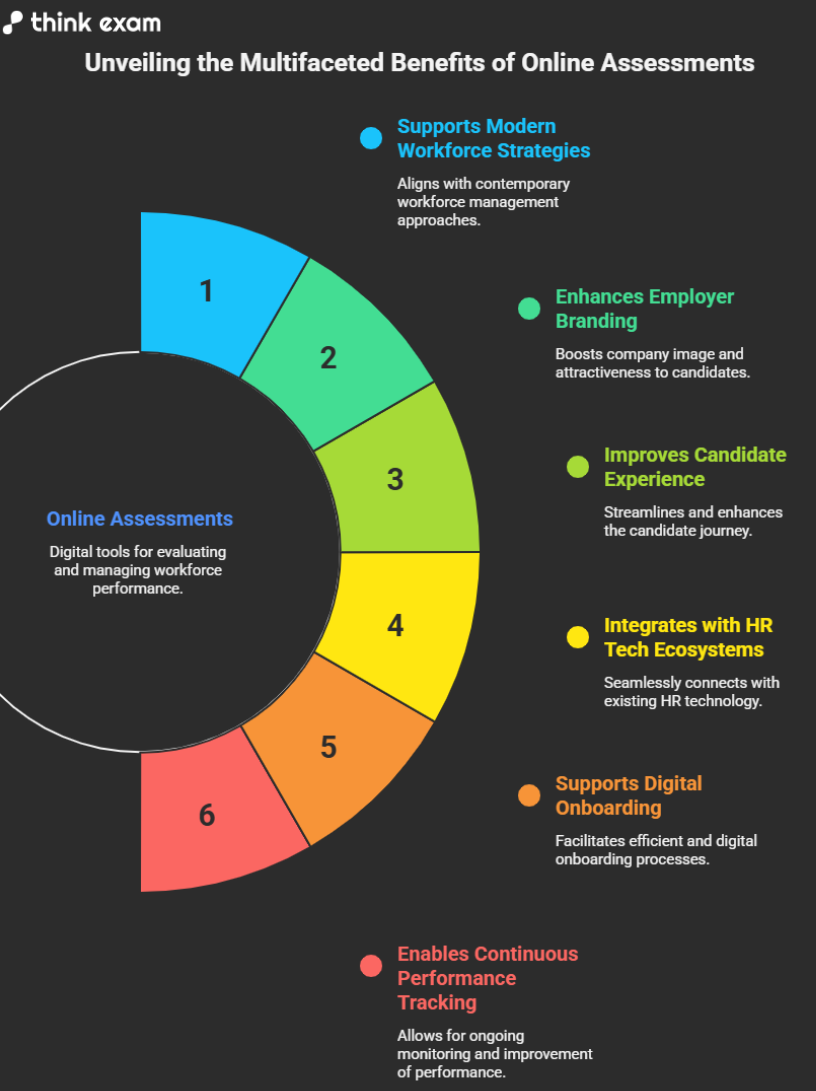
Why this matters
- Supports modern workforce strategies
- Enhances employer branding
- Improves candidate experience
How online assessments fit in
- Integrate with HR tech ecosystems
- Support digital onboarding
- Enable continuous performance tracking
And to achieve them, companies need the following:
- Tech-enabled recruitment systems
Online assessment platforms integrate seamlessly with ATS and HRMS systems. - Improved candidate experience
A smooth digital hiring process enhances the company’s reputation. - Future-ready hiring strategies
Organizations adopting digital hiring tools stay competitive in evolving job markets.
8. Standardisation and Fair Hiring Practices
Bias and inconsistency are common challenges in traditional hiring methods.
Problems with traditional hiring
- Subjective decision-making
- Inconsistent evaluation
- Lack of measurable criteria
How online assessments solve this
- Provide objective scoring systems
- Standardise candidate evaluation
- Reduce human bias
And to achieve them, companies need the following:
- Equal opportunity hiring
All candidates are assessed under the same conditions. - Transparent evaluation process
Clear scoring systems improve trust and credibility. - Compliance and governance
Standardised hiring processes support organisational and regulatory requirements.
In the end..
In 2026, companies are rethinking their approach to hiring. The adoption of online assessment platforms, GCC hiring solutions, UAE recruitment software, and Saudi digital hiring tools reflects a broader shift toward smarter and more efficient talent evaluation.
By leveraging:
- AI-powered proctoring
- Data-driven analytics
- Scalable digital platforms
Organisations can:
- Improve hiring accuracy
- Reduce costs
- Enhance candidate experience
As the demand for skill-based hiring and remote recruitment continues to grow, online assessments will play a crucial role in shaping the future of hiring.
FAQs
1. Why are companies adopting online assessments in 2026?
Companies are using them to enable skill-based hiring, remote recruitment, and scalable evaluation processes.
2. Are online assessments reliable for hiring decisions?
Yes, with AI proctoring and analytics, they provide secure and accurate evaluations.
3. How do online assessments support hiring in the GCC region?
They enable companies to conduct remote, standardized, and large-scale assessments across regions.
4. What are the benefits of using online assessment software?
It improves hiring accuracy, reduces costs, and provides data-driven insights.
5. Can online assessment platforms handle large-scale hiring?
Yes, they are designed to evaluate thousands of candidates simultaneously with consistent accuracy.