
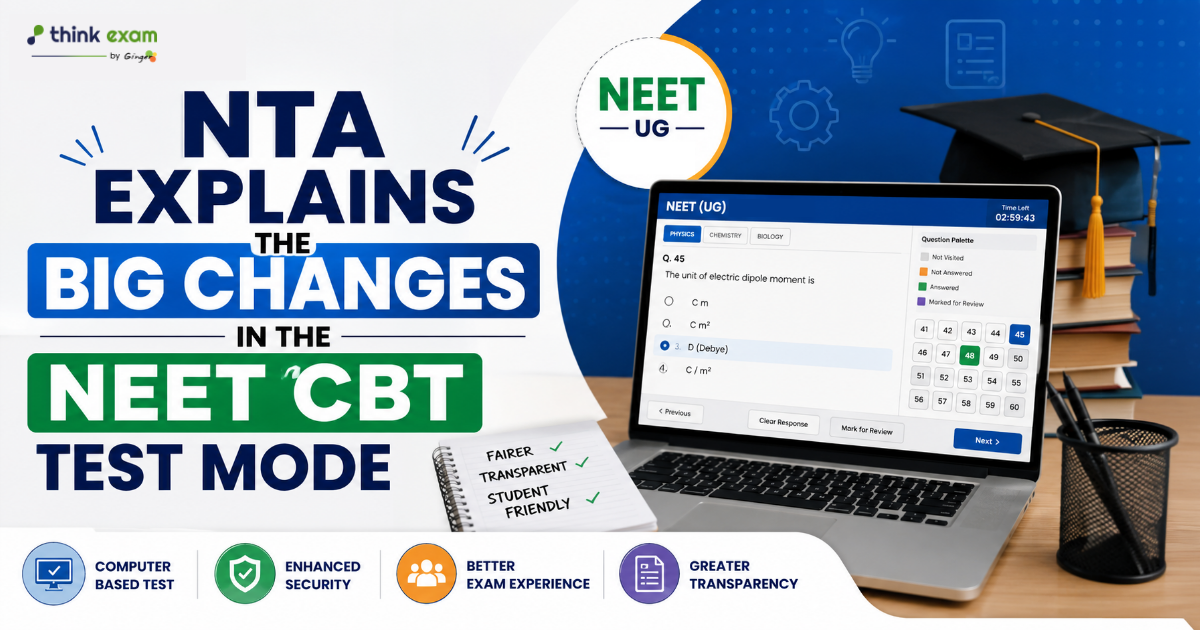
For years, students have prepared for NEET with one clear picture in mind—a pen, an OMR sheet, and a classroom full of candidates. But as India’s examination system evolves, discussions around NEET CBT have become stronger than ever.
A move toward a computer-based format is not simply about replacing paper with a screen. It changes how exams are managed, how students interact with questions, and how institutions ensure fairness at a large scale.
Many students are now asking:
- What exactly is CBT mode?
- How is it different from the current format?
- Will preparation strategies change?
- What should candidates expect from a digital exam experience?
This guide explains the possible changes in a simple and practical way.
What Does CBT Mode Mean?
Every year, millions of students appear for NEET. Managing such a large examination involves:
- Printing question papers
- Transporting papers securely
- Managing thousands of centers
- Collecting answer sheets
- Processing results
A digital system can simplify many of these operations.
A NEET CBT test can help improve:
- Exam security
- Administrative efficiency
- Faster processing
- Better standardization across centers
The goal is not to make the exam harder. It is to make the overall process more reliable.
Why Is NEET Moving Towards CBT?
The discussion around NEET CBT is largely driven by the increasing size of the examination.
Every year, millions of students appear for NEET. Managing such a large examination involves:
- Printing question papers
- Transporting papers securely
- Managing thousands of centers
- Collecting answer sheets
- Processing results
A digital system can simplify many of these operations.
A NEET CBT test can help improve:
- Exam security
- Administrative efficiency
- Faster processing
- Better standardization across centers
The goal is not to make the exam harder. It is to make the overall process more reliable.
NEET CBT Mode Is About Consistency
- One interesting advantage of NEET CBT mode is consistency.
- In offline exams, factors like paper quality, printing issues, or damaged answer sheets can sometimes create unnecessary problems.
- In a digital environment, every student sees the same interface, the same timer, and the same question display.
- This creates a more uniform testing experience.
The Biggest Difference Students Will Notice
- Many students think the biggest change in CBT NEET will be technology.
- In reality, the biggest difference may simply be screen reading.
- Reading long questions on paper and reading them on a computer screen can feel different.
- Some students naturally move faster on paper, while others find digital navigation easier.
- This is why regular practice through mock online assessment platforms becomes important.
- The more comfortable students become with digital interfaces, the less stressful the actual exam may feel.
Question Navigation Becomes More Flexible
One practical advantage of a CBT mode of exam is easier navigation.
Most computer-based systems allow students to:
- Move between questions
- Mark questions for review
- Change answers before final submission
- Keep track of remaining time
This gives students greater control over their exam strategy.
Rather than flipping pages manually, they can quickly jump between sections.
Why Mock Tests Matter More Than Ever
Preparing for NEET CBT is not only about studying Physics, Chemistry, and Biology.
Students should also become familiar with the digital environment itself.
Taking mock tests on a CBT mode platform helps students:
- Improve confidence
- Learn screen navigation
- Build time management skills
- Reduce exam-day anxiety
Many coaching institutes have already started using digital mock systems because they closely match the actual testing experience.
How Online Assessment Platforms Support Better Preparation
Modern online assessment systems do much more than generate scores.
They help students understand:
- Which topics need more practice
- How much time they spend per question
- Which sections slow them down
- Where accuracy can improve
Instead of simply telling students how many marks they scored, these platforms help them understand how they performed.
That insight can make preparation more focused.
The Human Side of the Change
Whenever exam formats change, students naturally feel nervous.
Many worry that a digital format will be difficult.
But the truth is that most students already use technology every day for:
- Online classes
- Learning apps
- Practice questions
- Video lectures
The transition to NEET CBT mode is less about learning computers and more about becoming comfortable with a different exam environment.
With regular practice, the digital format can become just as familiar as the traditional one.
What Institutions Gain From CBT Mode
The shift toward CBT NEET is not only beneficial for students.
Institutions also gain advantages such as:
- Easier exam management
- Better security controls
- Reduced paper handling
- Faster administrative processes
- Improved reporting systems
As competitive exams continue to grow in size, these improvements become increasingly valuable.
The Future Is About Readiness
- Whether the transition happens gradually or quickly, one thing is becoming clear.
- Digital assessments are becoming a bigger part of education.
- Students who start practicing in an online exam environment today may feel more confident if larger entrance exams adopt similar systems in the future.
- Success will still depend on preparation and knowledge.
The format may change, but the goal remains the same: giving every student a fair opportunity to perform their best.
Final Thoughts
The conversation around NEET CBT is not really about replacing paper with computers.
- It is about building an examination system that can handle large numbers of students while improving security, consistency, and efficiency.
- Understanding what CBT mode means, becoming comfortable with digital mock tests, and practicing through an online assessment platform can help students adapt smoothly.
- At the end of the day, technology is simply the medium.
Preparation, confidence, and understanding of concepts will always remain the biggest factors behind success.
FAQs
What is NEET CBT?
NEET CBT is a computer-based version of the NEET examination where candidates answer questions digitally instead of using an OMR sheet.
CBT mode means what?
CBT mode means Computer Based Test. In this format, students take the exam on a computer using a secure testing system.
Is the syllabus different in NEET CBT mode?
No. The syllabus, subjects, and marking scheme remain the same. Only the exam delivery method changes.
How is CBT NEET different from the traditional exam?
The biggest difference is that students answer questions digitally, navigate through the exam on a screen, and use an on-screen timer instead of a physical answer sheet.
Why should students practice on an online assessment platform?
An online assessment platform helps students become familiar with digital exams, improve time management, and reduce anxiety before the actual test.
Will the NEET CBT test be harder than the current format?
No. The difficulty level depends on the questions, not the format. The computer simply changes how students submit their answers.
What is the best way to prepare for a CBT mode of exam?
The best approach is to combine subject preparation with regular online mock tests so that students become comfortable with both the syllabus and the digital exam environment.





This could be a big step towards paper leak.