Choosing an assessment platform sounds simple until you start comparing options.
Almost every provider promises advanced features, smart reports, automation, and a better testing experience. The feature lists often look similar, making it difficult to understand which platform is actually the right fit.
The truth is, a good platform is not the one with the longest list of features.
It is the one that helps you create fair, reliable, and meaningful online exam assessment experiences for your candidates.
Whether you’re hiring employees, training teams, conducting certifications, or delivering academic exams, choosing the right platform can improve both efficiency and assessment quality.
Here are the factors that matter most.
Start With the Outcome, Not the Software
Many organisations begin by comparing products.
A better approach is to first define your assessment goals.
Ask yourself:
- Are you hiring at scale?
- Are you conducting employee training?
- Are you delivering certification exams?
- Are you assessing students?
- Do you need regular internal evaluations?
The answers will help you identify what your online exam assessment platform needs to deliver instead of paying for features you may never use.
A Good Question Bank Is More Valuable Than a Fancy Dashboard
Dashboards often attract attention during product demonstrations.
But over time, the question bank becomes far more important.
A strong online assessment platform should allow you to:
- Organise questions by category
- Set difficulty levels
- Reuse questions across assessments
- Update content easily
- Build multiple versions of the same test
Well-managed question banks improve assessment quality year after year.
Think About the Candidate Experience
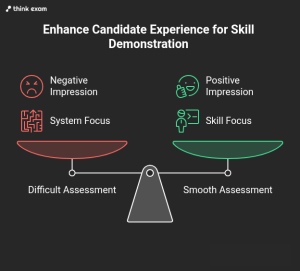
Candidates judge your organisation through every interaction.
If your assessment is difficult to access or confusing to complete, it can create a negative impression before the interview even begins.
A good platform should provide:
- Clear instructions
- Simple navigation
- Fast loading pages
- Mobile-friendly access where appropriate
- Easy question review
The smoother the experience, the more candidates can focus on demonstrating their skills instead of figuring out the system.
Reporting Should Help You Make Decisions
Receiving dozens of reports is not the same as receiving useful insights.
A well-designed online exam assessment platform should answer practical questions such as:
- Who is ready for the next hiring stage?
- Which skills need improvement?
- Which questions were too easy or too difficult?
- Where are candidates spending the most time?
Reports should simplify decision-making, not create more work.
Choose a Platform That Can Grow With You
Many organisations purchase software that works well today but struggles as hiring or assessment volumes increase.
Before making a decision, consider future requirements.
Can the platform support:
- More users?
- Multiple departments?
- Different assessment types?
- New office locations?
- Seasonal hiring campaigns?
Scalability is often overlooked during the buying process, but it becomes critical as organisations grow.
Integration Saves More Time Than You Think
Assessment platforms rarely work in isolation.
Recruiters often use applicant tracking systems, HR software, or learning management systems alongside assessments.
A platform that integrates with your existing recruitment software helps reduce manual work by allowing information to move automatically between systems.
This creates a smoother workflow for recruiters and hiring managers.
Don’t Ignore the Administrator Experience
Candidates are not the only users.
HR teams, trainers, and administrators interact with the platform every day.
An effective online assessment platform should make it easy to:
- Schedule assessments
- Invite candidates
- Manage question banks
- Track progress
- Generate reports
If administrators struggle with the system, productivity will suffer regardless of how many features it offers.
Look Beyond Today’s Requirements
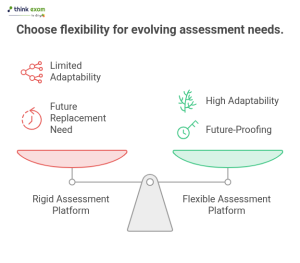
Assessment needs rarely stay the same.
A platform that supports only one assessment type may become limiting as business needs evolve.
Many organisations eventually expand into:
- Employee training
- Campus hiring
- Certification programs
- Internal promotions
- Skill development initiatives
Choosing a flexible solution reduces the need to replace software in the future.
Support Matters After Implementation
Many buyers focus on product demonstrations but overlook ongoing support.
Before selecting a platform, ask about:
- User onboarding
- Training resources
- Technical assistance
- Product updates
- Customer support availability
Good support can significantly reduce implementation challenges and improve long-term success.
Ask Questions Before Signing a Contract
Before making a final decision, ask vendors questions such as:
- How easy is it to update assessments?
- Can the platform support large candidate volumes?
- How are reports generated?
- What integrations are available?
- How often is the platform updated?
- What onboarding support is included?
The answers often reveal more than a feature comparison sheet.
Think Beyond Digital Transformation
Many organisations adopt assessment technology as part of their digital transformation strategy.
However, the goal should not simply be moving assessments online.
The goal should be to create better assessments.
A strong online exam platform helps organisations evaluate skills more effectively, improve candidate experience, reduce administrative work, and support better decision-making.
Technology should improve the assessment process, not simply digitise it.
Final Thoughts
Selecting an assessment platform is an important long-term decision.
Instead of focusing only on feature lists, organisations should evaluate how well the platform supports assessment quality, candidate experience, reporting, scalability, and day-to-day management.
A reliable online exam assessment solution should help you build better tests, generate meaningful insights, and support consistent evaluation as your organisation grows.
Combined with a capable online assessment platform, integrated recruitment software, and a thoughtful approach to digital transformation, the right technology becomes much more than an assessment tool.
It becomes an important part of building a smarter evaluation process.