
A good assessment should do more than generate a score.
It should accurately measure a candidate’s knowledge, deliver results quickly, and ensure every participant is evaluated under the same conditions.
These expectations are becoming harder to meet with traditional paper-based testing, especially when thousands of candidates are involved. Manual processes, inconsistent evaluation methods, and delayed results can all affect the quality of an assessment.
This is why more educational institutions, coaching centres, certification bodies, and organisations are adopting the computer based exam model.
The biggest advantage is not simply that the exam is conducted on a computer. It is that every stage of the assessment becomes more accurate, faster, and fairer for everyone involved.
Let’s explore how.
Accuracy Starts with Consistent Evaluation
In any assessment, consistency is essential.
When exams rely on manual processes, there is always a possibility of human error during evaluation, data entry, or result compilation.
A computer based exam reduces these risks by following predefined evaluation rules for every candidate.
Whether 100 or 100,000 candidates take the assessment, the evaluation process remains consistent.
This helps institutions maintain confidence in their results.
Better Question Management Improves Assessment Quality
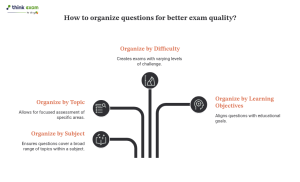
The quality of an exam depends on the quality of its questions.
Modern computer based test platforms allow administrators to organise question banks by:
- Subject
- Topic
- Difficulty level
- Learning objectives
Questions can also be reviewed and updated regularly without rebuilding the entire assessment.
This creates more balanced and reliable exams over time.
Faster Results Support Faster Decisions
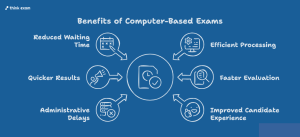
Waiting several days for results can delay admissions, recruitment, certifications, and training programmes.
A computer based exam helps shorten this process.
Since responses are captured digitally, organisations can process objective questions much more efficiently than traditional paper-based assessments.
This allows institutions to:
- Publish results sooner
- Begin the next stage of evaluation faster
- Reduce administrative delays
- Improve the overall candidate experience
For organisations conducting frequent assessments, faster reporting becomes a major operational advantage.
Every Candidate Gets the Same Testing Experience
Fairness is one of the most important goals of any assessment.
Every candidate should receive the same instructions, timing, and testing conditions.
A CBT test creates consistency by providing:
- Standardised exam interfaces
- Uniform navigation
- Equal timing for all candidates
- Consistent question presentation
This reduces variations that can occur in manual testing environments and helps ensure that performance is judged under comparable conditions.
Data Helps Improve Future Exams
Assessments should continue to improve over time.
One advantage of digital testing is the ability to collect meaningful data after every exam.
A computer based test can help administrators understand:
- Which questions were most difficult
- Which topics candidates struggled with
- Average completion times
- Overall performance trends
These insights help institutions refine future assessments and improve question quality.
Candidates Spend Less Time Managing the Exam
In traditional exams, candidates often spend unnecessary time turning pages, checking instructions, or locating unanswered questions.
A computer based exam provides tools that simplify navigation.
Candidates can:
- Move between questions easily
- Mark questions for review
- Track unanswered questions
- Monitor remaining time
These features help candidates focus more on solving problems and less on managing the assessment itself.
Large-Scale Assessments Become More Reliable
Conducting assessments for thousands of candidates requires careful coordination.
Manual processes can increase the chances of logistical errors.
A computer based exam simplifies large-scale assessment management by providing standardised workflows across multiple testing locations.
This consistency becomes especially valuable for national entrance examinations, certification programmes, recruitment drives, and institutional evaluations.
Online Assessments Create Better Performance Insights
A score tells candidates how they performed.
Analytics explain why.
Modern online assessments provide detailed reports that help institutions understand:
- Topic-wise performance
- Accuracy levels
- Learning gaps
- Individual and batch trends
These insights support better academic planning, employee development, and recruitment decisions.
Digital Assessments Reduce Administrative Work
Assessment management involves much more than conducting the exam.
Administrators must also manage:
- Scheduling
- Candidate registration
- Attendance
- Evaluation
- Result publication
- Record maintenance
A computer based exam simplifies many of these activities, allowing institutions to spend less time on administrative tasks and more time improving the assessment process.
Fair Assessments Build Greater Trust
Candidates expect assessments to be transparent and unbiased.
Institutions also want results that can be defended with confidence.
By standardising exam delivery and evaluation, online exams help build trust among students, employees, recruiters, and certification bodies.
When candidates believe they have been evaluated fairly, confidence in the assessment process increases.
Preparing for the Future of Assessments
The demand for digital assessments continues to grow.
Educational institutions are expanding their use of technology.
Organisations are conducting skill-based hiring at larger scales.
Professional certification providers are reaching candidates across multiple locations.
A computer based exam provides the flexibility needed to support these evolving assessment requirements while maintaining quality and consistency.
Final Thoughts
The value of a computer based exam goes far beyond replacing paper with a computer screen.
It improves the overall assessment process by increasing accuracy, delivering faster results, creating a fair testing environment, and providing meaningful performance insights.
As CBT test systems, computer based test platforms, online exams, and online assessments continue to evolve, organisations will increasingly focus on assessment quality rather than simply assessment delivery.
The future belongs to examinations that are not only digital but also accurate, efficient, and fair for every candidate.