Taking an exam from home sounds simple. A candidate logs in, answers the questions, and submits the test.
But for the organisation conducting the examination, the situation is more complicated.
How can they know that the right person is taking the test? How can they prevent candidates from using unauthorised resources? And what happens when thousands of people are taking the exam from different locations at the same time?
This is where proctoring becomes important.
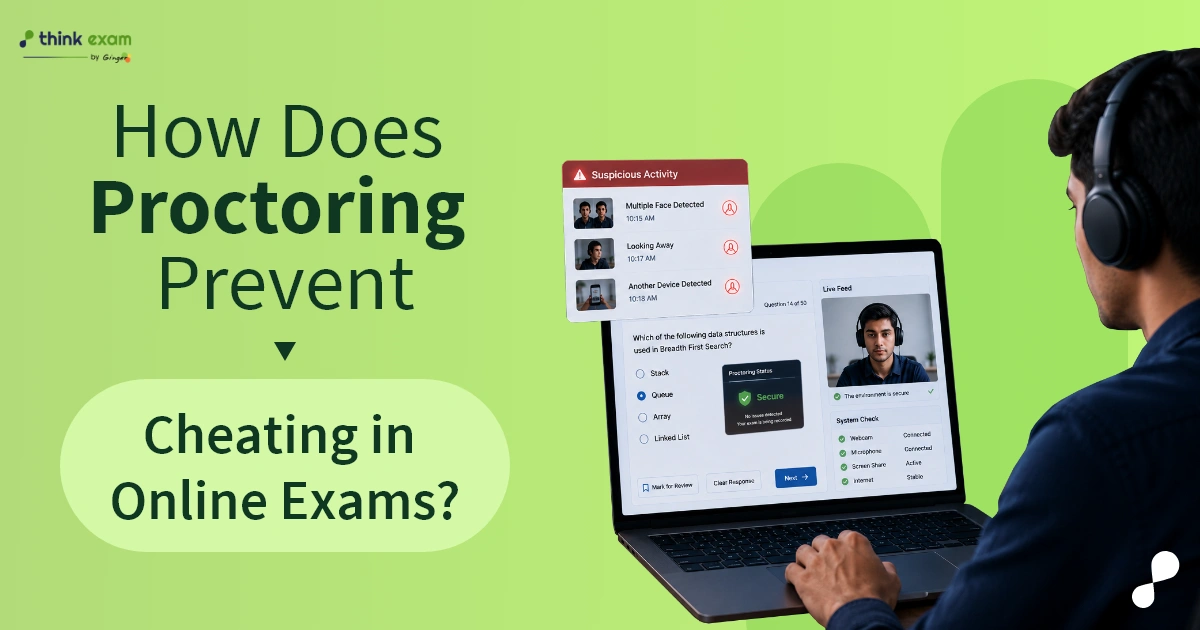
Modern proctoring does more than watch candidates through a webcam. It can combine identity verification, digital restrictions, AI-assisted monitoring, and human review to create a more controlled examination environment.
The goal isn’t to assume every candidate is trying to cheat. It is to make unauthorised assistance harder, identify unusual activity, and provide evidence that can be reviewed when necessary.
Start With Knowing Who Is Taking the Exam
Exam security begins before the first question appears.
If an assessment is high-stakes, the organisation needs confidence that the registered candidate is the person taking the test.
An online exam proctoring system can support identity verification through methods such as candidate credentials, ID verification, facial matching, or other authentication processes depending on the examination requirements.
This helps reduce the risk of impersonation.
It also creates a stronger starting point for the rest of the monitoring process.
Restrict Access to Unauthorised Resources
A candidate can be sitting alone in a room and still have access to a world of information through their computer.
They could potentially open a search engine, messaging application, stored document, or another browser tab.
This is why monitoring alone is not enough.
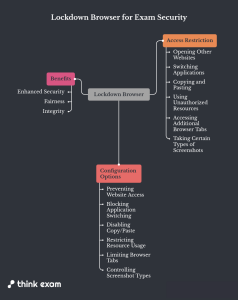
A lockdown browser can restrict access to certain websites, applications, and device functions while the examination is running.
Depending on the configuration, it can prevent activities such as:
- Opening other websites
- Switching applications
- Copying and pasting
- Using unauthorized resources
- Accessing additional browser tabs
- Taking certain types of screenshots
This adds a technical layer of protection to the examination.
Instead of relying only on a human to notice that a candidate has opened another application, the testing environment itself can restrict the activity.
Monitor Candidate Behaviour During the Exam
Even with digital restrictions in place, candidates still need to be monitored.
This is where remote proctoring can help.
Depending on the assessment setup, the system may use a candidate’s webcam and microphone to monitor the examination environment and identify potentially unusual activity.
Possible events can include:
- Candidate leaving the camera view
- Multiple people appearing
- Unexpected voices or sounds
- Repeated unusual movements
- Camera obstruction
- Suspicious objects appearing in the frame
The purpose is not to treat every unusual movement as cheating.
Someone may look away while thinking. A family member may accidentally enter the room. Background noise may occur.
The important part is what happens after an event is detected.
AI Helps Identify What Needs Attention
Watching hours of recorded examination footage manually is difficult, especially when thousands of candidates are involved.
AI-assisted proctoring can help by identifying events that may require review.
Instead of asking a human reviewer to watch every second of every session, the system can highlight potentially important moments.
For example, a reviewer may be able to see:
10:42 — Candidate leaves camera view
10:51 — Additional face detected
11:03 — Unexpected audio detected
This makes the review process more focused.
However, an AI alert should not automatically equal a cheating verdict.
AI can identify patterns or events. Human reviewers can assess the context.
A Proctored Assessment Creates a Record
One of the biggest advantages of a proctored assessment is that the examination can generate a record of what happened during the session.
Depending on the platform and settings, this may include:
- Candidate identity information
- Session recordings
- Monitoring events
- Timestamps
- Suspicious activity alerts
- Exam activity
- Submission information
This can be useful when an organisation needs to investigate a particular session.
Instead of relying on someone’s memory or a single observation, reviewers can examine the available evidence.
Human Review Still Matters
There is a common assumption that automated proctoring is designed to replace human invigilators.
That’s not necessarily the best approach.
Technology is good at continuous monitoring and identifying patterns across large numbers of sessions.
Humans are better at understanding context.
For example, an alert may show that a candidate looked away from the screen several times. A reviewer can determine whether there was a reasonable explanation or whether the broader session contains additional concerns.
This creates a stronger model:
AI detects → Evidence is collected → Human reviews → Appropriate action is taken
The technology supports the decision rather than making every decision automatically.
Randomisation Makes Answer Sharing More Difficult
Cheating isn’t limited to accessing websites.
Candidates may also try to share questions or answers with other test-takers.
Assessment platforms can reduce this risk by using question randomisation.
Candidates may receive questions in different orders or from larger question pools, depending on how the assessment is designed.
When combined with online exam proctoring, this creates another layer of protection.
Even if candidates attempt to communicate with each other, having different question sequences or sets can make answer sharing more difficult.
Security Should Continue After the Exam
Exam security doesn’t end when the candidate clicks “Submit.”
Organisations conducting high-stakes online exams may need to review flagged sessions and investigate unusual events.
This is why reporting is an important part of proctoring.
A useful system can help administrators identify:
- Which candidates received alerts
- What type of event occurred
- When it occurred
- Whether multiple alerts occurred in the same session
- Which sessions require human review
This allows review teams to prioritise their time instead of manually examining every candidate session in the same way.
Proctoring Is About Layers, Not One Feature
No single security feature can address every form of cheating.
A stronger proctoring strategy uses multiple layers.
Identity verification helps confirm the candidate.
Lockdown controls restrict unauthorised digital activity.
AI monitoring identifies potentially unusual events.
Session recording provides evidence for review.
Human oversight adds context and judgement.
Together, these layers create a much stronger examination environment than relying on any one method alone.
The Right Level of Proctoring Depends on the Exam
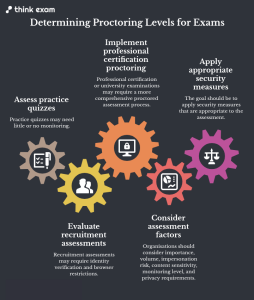
Not every online test requires the same level of security.
A practice quiz may need little or no monitoring.
A recruitment assessment may require identity verification and browser restrictions.
A professional certification or university examination may require a more comprehensive proctored assessment process.
Organisations should therefore consider:
- The importance of the assessment
- Candidate volume
- Risk of impersonation
- Sensitivity of examination content
- Required level of monitoring
- Privacy and data requirements
The goal should be to apply security measures that are appropriate to the assessment rather than adding technology simply for the sake of it.
Making Online Exams More Trustworthy
The real value of online exam proctoring isn’t that it makes cheating impossible.
No examination system can realistically make that promise.
Its value is in creating multiple barriers against unauthorised behaviour, detecting activity that may need investigation, and providing organisations with evidence when concerns arise.
For universities, certification providers, recruiters, and other organisations conducting remote assessments, this can make online testing more reliable.
Candidates also benefit.
When everyone knows that the same security rules apply to everyone, genuine candidates can have greater confidence that their performance is being evaluated fairly.
Building Trust in the Digital Examination
The move toward online testing has made assessments more accessible and scalable. But convenience cannot come at the cost of credibility.
Effective proctoring addresses this challenge by combining prevention, monitoring, detection, and review.
A secure online examination isn’t created by simply turning on a webcam.
It comes from creating an environment where unauthorised activity is restricted, unusual behaviour can be identified, and human reviewers have the information they need to make informed decisions.
That’s what makes remote proctoring more than a monitoring tool.
It becomes part of the wider process of protecting the integrity of an online examination.