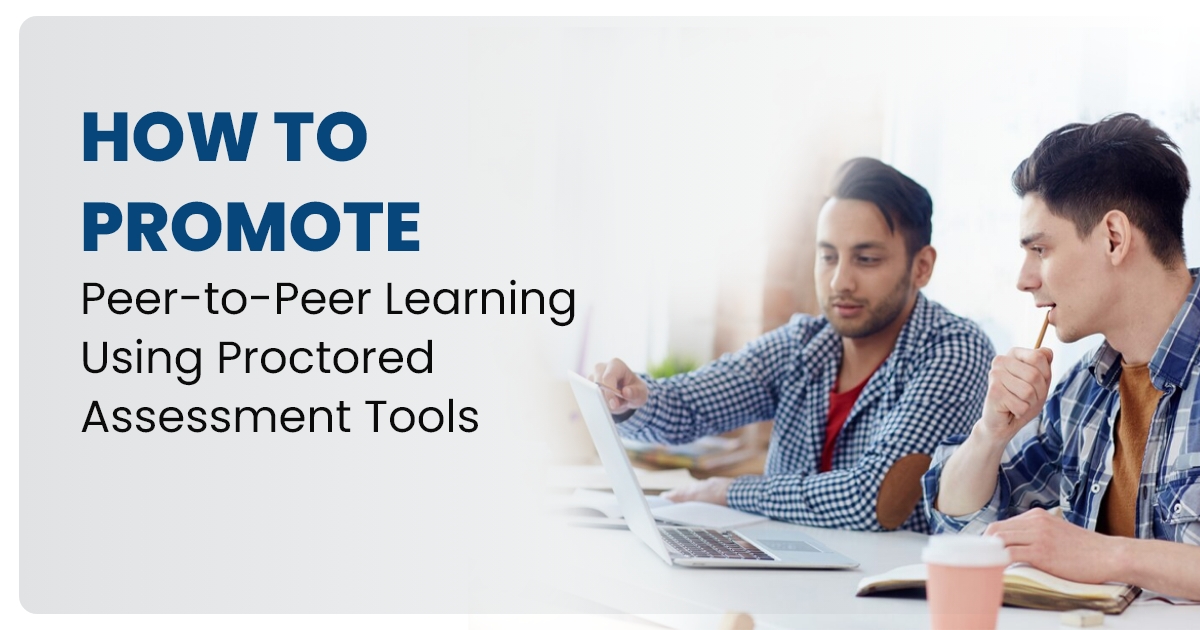
Learning does not always have to happen through a teacher, trainer, or instructor. People often learn just as much by discussing ideas with others, explaining what they know, reviewing someone else’s work, and solving problems together. This is the basic idea behind peer-to-peer learning.
The approach is being used across schools, universities, professional courses, and corporate training programs. As more of these activities move online, however, assessment becomes a little more complicated. How do you make sure the right person is taking the test? How do you maintain fair testing conditions? And how do you protect the credibility of the final result?
This is where proctored assessment tools can become useful. They add a layer of security to formal online assessments while still allowing learners to collaborate, discuss ideas, and learn from one another.
What Is Peer-to-Peer Learning?
Peer-to-peer learning is a way of learning where participants learn from each other instead of depending entirely on an instructor.
For example, students might review each other’s assignments, discuss different ways to solve a problem, or explain a difficult concept to a classmate. In a corporate training program, employees might share their experiences, review a colleague’s work, or work together on a real business scenario.
The idea is simple: everyone in the group has something to contribute.
Common peer-learning activities include:
- Peer reviews and feedback
- Group discussions
- Collaborative projects
- Knowledge-sharing sessions
- Problem-solving exercises
- Peer assessments
- Practical assignments
These activities can make learning more interactive and give participants a chance to look at a subject from different perspectives.
Why Is Peer-to-Peer Learning Important?
1. It Encourages Knowledge Sharing
People often understand a topic differently. When learners explain their approach to others, they may discover new ways of looking at the same problem.
For example, two employees working on the same training exercise may arrive at different solutions. Discussing those solutions can help both of them understand the topic more clearly.
2. It Develops Critical Thinking
Peer learning isn’t just about sharing answers. Learners also need to question ideas, compare approaches, explain their reasoning, and provide constructive feedback.
These activities encourage people to think beyond simply remembering information.
3. It Keeps Learners Involved
A learning program becomes more interactive when participants have something to contribute.
Instead of listening to a lesson and moving on to the next topic, learners can discuss what they have learned, ask questions, review each other’s work, and apply their knowledge to practical situations.
4. It Reinforces Understanding
Explaining something to another person requires a learner to organize their thoughts clearly. That process can reveal gaps in their own understanding.
Peer feedback can add another layer by showing learners how others interpret or apply the same concept.
What Challenges Can Occur With Online Peer Assessments?
Peer learning works well for collaboration, but formal assessment introduces a different set of requirements.
Suppose a university uses peer learning as part of a course and then conducts an online examination that contributes to the final grade. Or imagine a company where employees complete collaborative training followed by an individual certification test.
In both cases, the organization may need to know:
- Is the registered person taking the assessment?
- Are the assessment rules being followed?
- Is the test being taken under appropriate conditions?
- Can unusual activity be identified and reviewed?
- Are assessment results being recorded securely?
These questions become particularly important when an assessment has a direct impact on grades, certification, recruitment, or employee evaluation.
This is one area where online proctoring can complement a peer-learning program.
How Can Proctored Assessments Support Peer-to-Peer Learning?
Proctoring isn’t a replacement for collaboration. Its role is different.
Peer learning creates opportunities for people to work and learn together, while proctored assessments can be used when an organization needs a more controlled environment for an individual assessment.
Here are some ways the two approaches can work together.
1. Keep Formal Assessments Secure
Not every activity in a peer-learning program needs to be proctored.
A group discussion, brainstorming session, or peer review can remain collaborative. But if learners need to complete an individual test, a proctored environment can add appropriate assessment controls.
This helps organizations separate collaborative learning from formal individual evaluation.
2. Verify Learner Identity
Identity verification matters when assessment results need to be linked to a specific learner.
Online proctoring solutions may include identity verification and other monitoring capabilities to help organizations establish who is taking an assessment.
3. Create Consistent Testing Conditions
Learners may be located in different cities, countries, or even time zones.
A digital assessment platform can provide standardized exam settings, while proctoring adds monitoring during the assessment. Together, these measures can create a more consistent testing experience for participants.
4. Monitor Assessment Activity
During a formal online assessment, organizations may need visibility into what is happening during the test.
AI-based proctoring can monitor predefined activities and flag events that may need further review. Importantly, a flag should not automatically be treated as proof of misconduct. Organizations should review such events according to their assessment policies.
5. Understand Learner Performance
Online assessments generate useful performance data.
Trainers and educators can use this information to identify topics where learners are performing well and areas that may require additional training.
When these results are considered alongside peer feedback and classroom or training observations, they can provide a broader view of learner progress.
How to Use Proctored Assessments in a Peer-Learning Program
The best approach is to decide where proctoring actually adds value instead of using it for every activity.
Step 1: Decide What Learners Need to Achieve
Start with the learning objective.
Are learners expected to understand a concept, solve a problem, demonstrate a practical skill, or complete a certification?
The answer will determine whether you need a discussion, peer review, individual test, or a combination of these activities.
Step 2: Build Opportunities for Collaboration
Give learners a chance to work together before the formal assessment.
This could be a group project, discussion, case study, peer review, or problem-solving activity.
The aim is to make learners active participants in the learning process.
Step 3: Add an Individual Assessment
Once the collaborative activity is complete, an individual assessment can be used to check what each learner has understood.
Depending on the program, this might include multiple-choice questions, scenario-based questions, written responses, or practical tasks.
Step 4: Use Proctoring Where It Makes Sense
If the assessment has important academic, professional, or certification consequences, proctoring may be appropriate.
The level of monitoring should match the purpose of the assessment and the organization’s requirements.
Step 5: Use the Results to Improve Learning
Don’t stop at the score.
Look at common mistakes, areas of weakness, and feedback from peers or instructors. These insights can help educators and trainers decide what learners should focus on next.
A Simple Example of Peer Learning With Proctored Assessment
Consider a company training employees on a new software application.
First, employees attend an online training session. They then work in small groups and share different ways of completing common tasks in the software.
After the group activity, each employee takes an individual knowledge test.
Because the test is part of a formal skills assessment, the company uses online proctoring to add identity verification and monitoring.
The trainer can then look at the assessment results alongside feedback from the group activity.
This gives the company two different types of information:
- How well employees worked and learned together
- How well each employee understood the subject individually
That combination can be more useful than relying on either method alone.
Benefits of Combining Peer Learning With Proctored Assessments
Better Assessment Integrity
When a formal test needs controlled conditions, proctoring can add another layer of security and monitoring.
More Flexibility
Online learning and remote assessment allow participants to take part without being in the same physical classroom or training center.
Better Performance Insights
Digital assessments make it easier to collect and review performance data. Trainers can use those insights to identify knowledge gaps and plan additional learning activities.
A Balance Between Collaboration and Individual Evaluation
Peer learning encourages people to work together. Formal assessments sometimes need to measure individual knowledge.
Using both approaches allows organizations to maintain collaboration while still evaluating individual performance when necessary.
How Think Proctor Supports Online Assessments
Think Exam’s Think Proctor is an online proctoring solution designed to support remote assessments.
Depending on the assessment setup, organizations can use proctoring capabilities to add monitoring and security controls to online examinations.
For universities, training organizations, and businesses, this can be useful when a learning program includes formal assessments that need additional oversight.
The important point is that proctoring doesn’t have to take away from peer learning. It can sit alongside collaborative activities and be used specifically for the parts of the program where individual assessment and exam integrity matter.
Best Practices for Using Proctored Assessments With Peer Learning
A few practical steps can make the overall experience smoother for both learners and administrators:
- Explain the assessment rules before the test begins.
- Tell learners what monitoring will be used and why.
- Keep collaborative activities separate from individual assessments when appropriate.
- Test the assessment process before the actual exam.
- Give learners clear technical instructions.
- Use proctoring at a level that matches the importance of the assessment.
- Review flagged activity carefully rather than treating every alert as misconduct.
- Follow appropriate policies for handling assessment and monitoring data.
- Use assessment results together with peer feedback to understand learner progress.
Conclusion
Peer-to-peer learning gives learners more opportunities to discuss ideas, share knowledge, review each other’s work, and solve problems together. It can be useful in both education and corporate training because learning becomes more active and collaborative.
When formal online assessments are included in the program, however, organizations also need to think about assessment integrity.
This is where proctored assessment tools can play a supporting role. They can add identity verification, monitoring, and other assessment controls without changing the collaborative nature of the learning experience.
Think Exam’s Think Proctor can be used as part of this approach when organizations need additional oversight for remote assessments.
The key is to use each tool for the right purpose: peer learning for collaboration and knowledge sharing, and proctored assessment for secure individual evaluation when it is required.
Frequently Asked Questions
What is peer-to-peer learning?
Peer-to-peer learning is a collaborative approach where students, employees, or other learners share knowledge, discuss ideas, give feedback, and learn from one another.
How can proctored assessment tools support peer-to-peer learning?
Proctored assessment tools can add security to formal online assessments within a peer-learning program. They can support identity verification, monitoring, and controlled testing while learners continue to collaborate and share knowledge.
Why is assessment integrity important in peer-to-peer learning?
Assessment integrity helps ensure that formal test results accurately reflect an individual’s knowledge or skills. This becomes particularly important when assessments affect grades, certifications, recruitment, or employee evaluations.
Can peer assessments be conducted online?
Yes. Digital assessment platforms can allow learners to review work, provide feedback, participate in peer assessments, and collaborate remotely.
How does AI proctoring help with online assessments?
AI proctoring can monitor predefined activities during an online assessment and flag potentially unusual events for review. It provides an additional layer of monitoring when formal assessments are conducted remotely.
Can proctored assessments be used for corporate training?
Yes. Companies can use proctored assessments for employee training, knowledge checks, certifications, and skill evaluations when they need additional controls around formal online testing.
What should organizations look for in a proctored assessment tool?
Organizations can consider features such as identity verification, assessment security, monitoring capabilities, configurable exam settings, reporting, analytics, scalability, and data protection.
Does proctoring replace peer-to-peer learning?
No. The two serve different purposes. Peer-to-peer learning focuses on collaboration and knowledge sharing, while proctoring helps secure formal assessments when individual performance needs to be evaluated.
How can online assessments improve peer-learning programs?
Online assessments can help measure individual understanding, identify learning gaps, collect performance data, and provide structured evaluation alongside collaborative learning activities.
How does Think Proctor support online assessment security?
Think Exam’s Think Proctor provides online proctoring capabilities that organizations can use to add monitoring and security controls to remote assessments, depending on their assessment requirements.