The Digital Transformation of Assessments: Remote Proctoring Software
The world of education and corporate training is transforming. Assessments have been assisting the learner all along to advance. Thus, they decide admissions, award degrees or diplomas, measure learning, decide on hiring, and give certifications. But the traditional exam-based approach no longer fits our connected, fast-paced world. The entire idea is to interact with learners and working professionals anyway, while maintaining fairness and security. Learners and employees are asking for more flexibility these days. They want to take exams from any place or use an online testing platform. This helps them get certifications that are valuable in the digital economy. Organizations want advanced assessments to make faster, data-driven decisions. They use these for jobs, leadership, or behavior evaluations, such as computer based recruitment exams. Platforms like Think Exam are shaping this new era in assessment. This is due to the convergence of expectations, challenges, and technologies. These platforms are changing how assessments are done.Emerging Trends in Assessments
1. Rise of Proctoring Solutions
To date more than sixty percent of exams are conducted with an AI-Powered Remote Proctoring System, which is able to detect suspicious activity, merely through utilisation of the exam proctoring software without any human presence and ai proctoring. Identity verification in real-time is slowly achieving a must-have feature in 78 % of the platforms.2. Upsurge in Remote Hiring and Digital Certification
Increasingly, distance recruitment assessments are also in use. Most hiring organizations 76 percent had included skills testing in 2023 for proper candidate assessment. This change in approach has been the ultimate reason for ensuring that AI-generated CVs are not canvassing unfit candidates. Online CV assessment or recruitment oriented exams are now safe with online exam software which secures objective exams through the internet.3. Hybrid Proctoring Scores in Trust
The survey revealed that 45% of organizations have human aided ai proctoring in conjunction to the high security tests to address the cases of any detecting violations in examinations. With the hybrid approach operational expenses are reduced by 30 percent and still implement either fairness or auditability exam proctoring software.4. The outbreak of mobile and cloud-based adoption
Research in 2024 estimated 38 million tests given using mobile devices and determined that mobile-driven testing increased by 46% over the year. The operational efficiency of the cloud-based exam system increased by a margin of 25%-40% as a result of use of the online testing platform that provides faster low latency delivery.The Human Side of Digital Assessments
- Assessments, although digital and automated, impact real lives, whether the assessors are trying to certify or students seeking higher education.
- Accessibility could also be providing multiple languages as well as a mechanism for considering any special needs of the differently-abled.
- Fairness means that every candidate will have an impartial and comprehensive evaluation aided by technology.
- Transparency means getting instant feedback, adequate process delineation, and a user-friendly interface.
- Evidence – 83% of the learners are more confident when they use transparent digital proctoring systems that come with secure online exams.
Who We Are
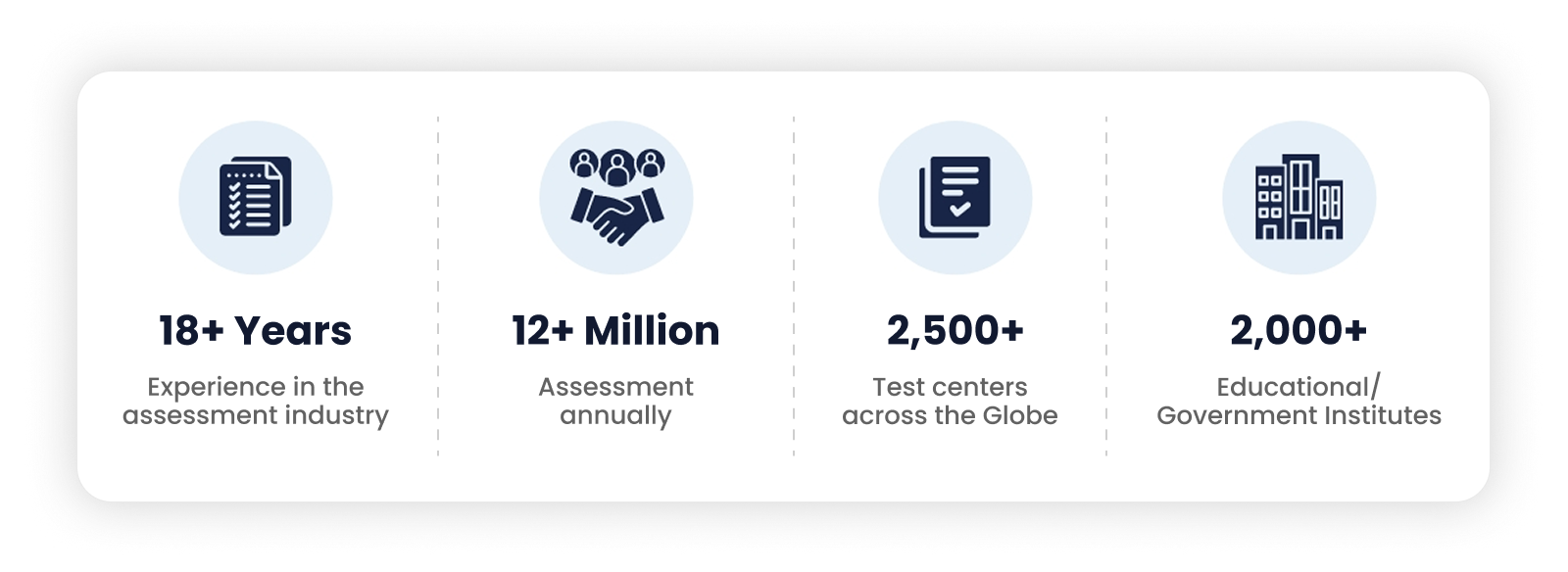
Think Exam goes beyond being an online examination and assessment platform. It is indeed the engine steering the way forward for assessments. As an internationally acclaimed provider of online examination and AI proctoring solutions, Think Exam is trusted by universities, corporations, government bodies, and certification providers across 40 countries. Having spent over ten years in innovation, Think Exam has changed and modernized examination processes. This change entails the creation of modern and intelligent digital spaces that are secure and scalable with online exam software. From CBTs (Computer based tests) at scale to corporate assessments to professional certification, we make sure that all evaluations are worthy of time, efficient, fair, and insightful, with Real-Time Cheating Detection capabilities. Removing the boundaries between the drawbacks of pencil-and-paper testing and the expectations of a digitally forward era, we essentially help organizations to measure knowledge and skills with credible accuracy and future-ready intelligence using the AI exam proctoring system.Key Milestones
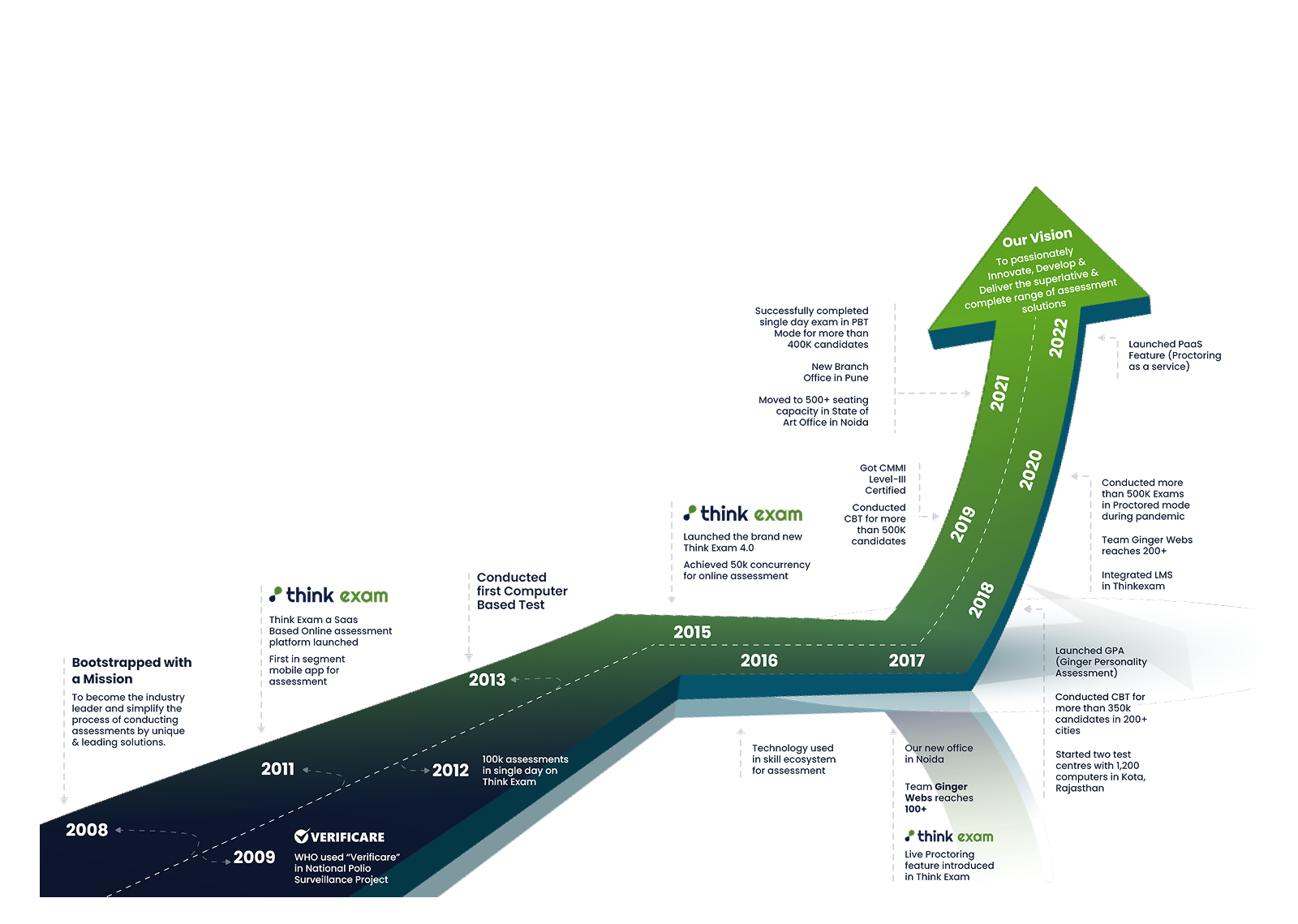
Our Vision
An ambitious aspiration to create a trustworthy ecosystem wherein the learner unlocks true potential and opportunities from a digitized, secure, AI-enabled, and inclusive examination powered by the best online exam platform.Our Mission
- The company aims to offer an online exam platform and AI proctoring solutions to serve the needs of the education system, corporates, and certification bodies alike.
- To provide cloud-native platforms capable of scalable growth to support millions of legitimate test-takers across the globe.
- To empower behavioral analytics and advanced report generation for data-based decision-making.
- To foster equal opportunities and inclusiveness so that assessments can overcome barriers of geography, culture, or infrastructural limitations.
Timeline
Industry Landscape
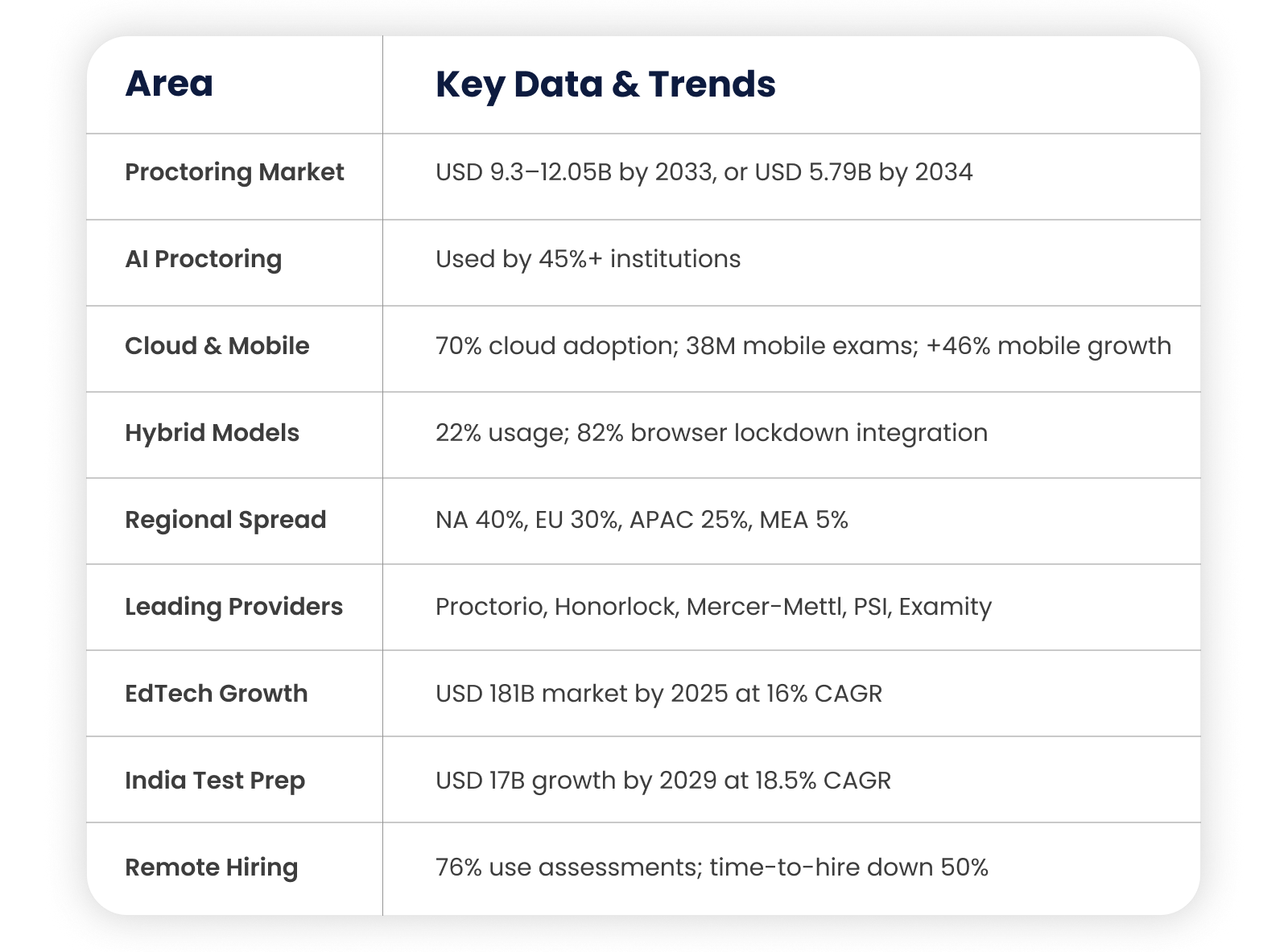
Challenges faced by the industry
1. Integrity of Examinations at Risk
Online exams face increasing levels of threat from cheating, impersonation, and unfair means to maintain credibility. Studies show 54.7% students admitted to cheating for online exams, almost doubling pre-COVID rates.2. Scalability Issues
Large-scale exams held in many geographies agitate traditional test centers and paper-based systems. Universities with 100,000+ candidates report breakdowns with any regular infrastructure in CBT.3. High Cost of Operations
Conduction of physical exams demands spending on logistics, accommodation, manpower, and administrative work, thus hindering the pace of academic and hiring cycles. A university conducting about 1,000 exams per annum spends about 270,000 pounds, with online exams cutting these costs by almost 50%.4. No Actionable Intelligence
Scores possess limited value; in essence, they give limited visibility to either skills or behavioral patterns to concerned institutions or corporates. While 74% of organizations want to cultivate data, only 29% of the organizations follow through and act on analytics in the present.5. Accessibility Issues
Digital exams tend to exclude learners in rural areas, low-bandwidth zones, or areas that put them at an accessibility disadvantage. Although 64% of the institutions consider online exams as more cost-effective, fair participation for several students is still a far reach.AI Proctoring: Redefining Exams with Think Proctor
In a technology-first world, online proctored exam solutions and proctoring test platforms have now become the backbone of assessments for universities, corporates, and certification bodies. But where you have accessibility, you also get malpractices, impersonations, hidden devices, and advanced cheating. Generic proctoring software is often no match for the sophistication of these challenges. Hence, Think Exam built Think Proctor: a smart, end-to-end ai proctoring and test proctoring solution that affords the security of face-to-face exams while allowing candidates a seamless interface. AI’s power has enabled Think Proctor to have multi-camera intelligence, safe browsing, and real-time monitoring of compliance, thus there are no blind spots, and the evaluations are honest and credible. 📊 Fact: According to a 2023 study, over 50% of the students confessed to cheating at least once during a non-online proctored exam. Nevertheless, institutions reported a decrease of 40% in cases of academic dishonesty at the most after the application of online proctoring software and advanced virtual proctoring solutions.What’s the newest upgrade in Think Proctor (AI proctoring)?
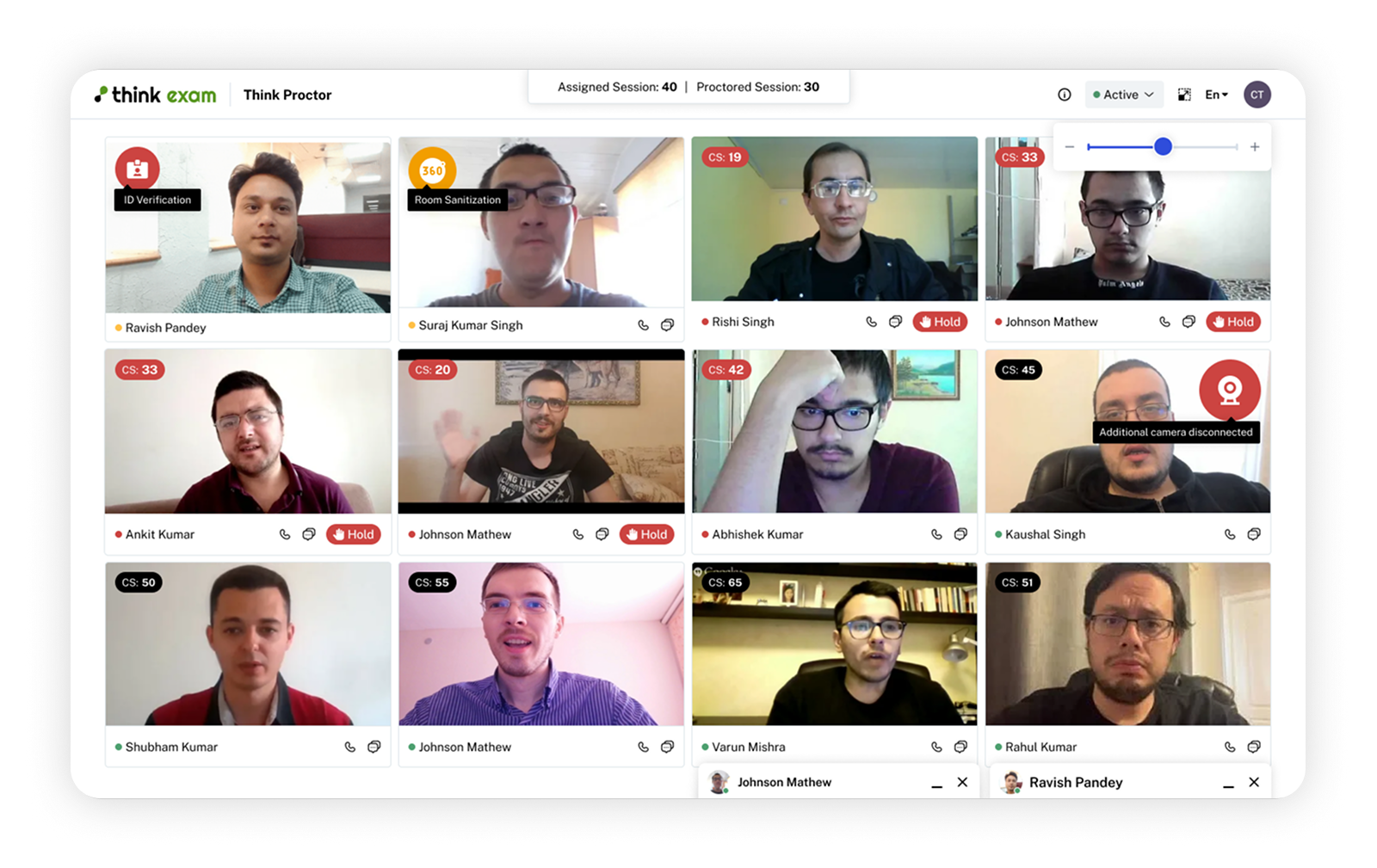
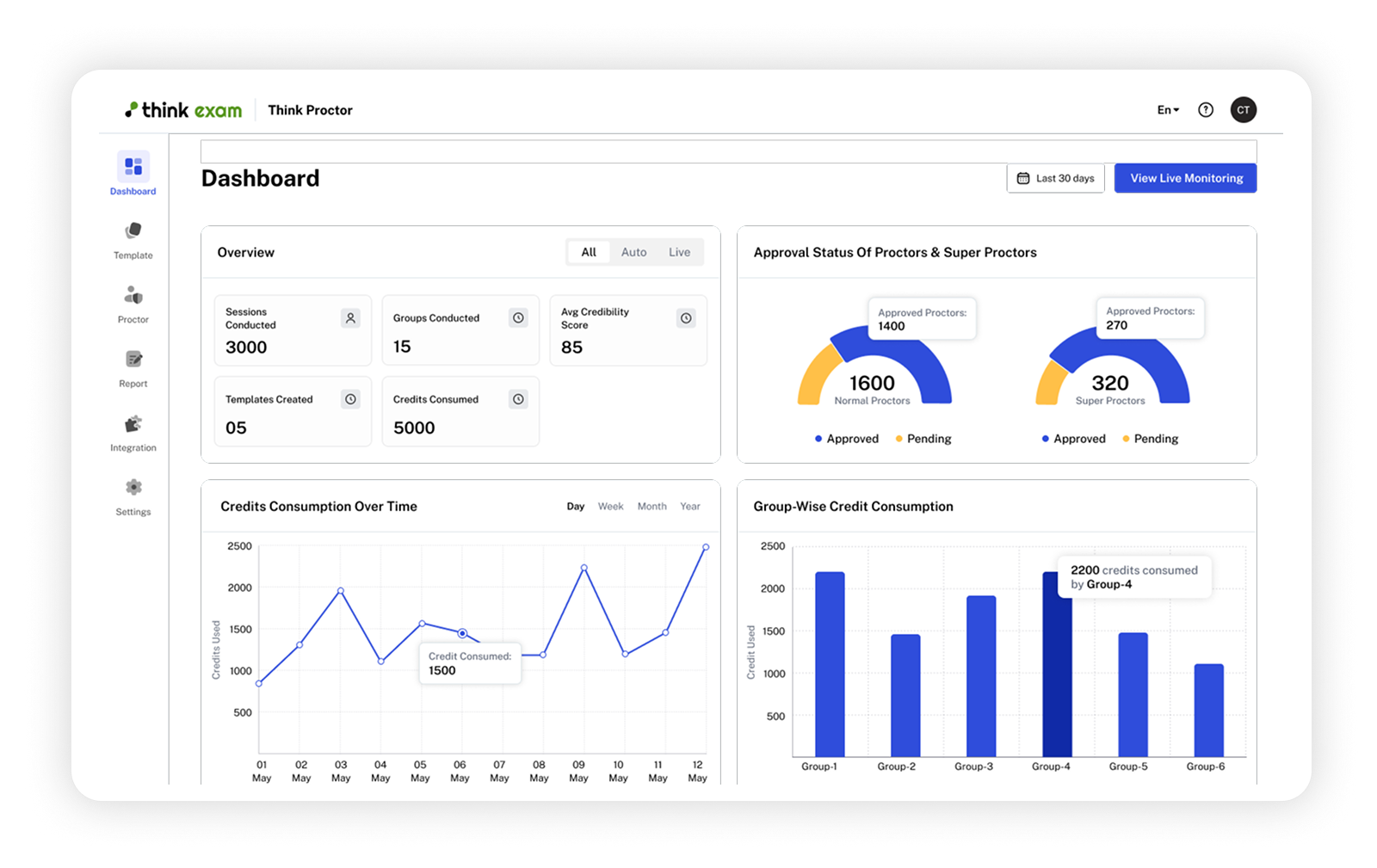
1. Super Proctor – Advanced Monitor
Think Proctor implements Super Proctor, a sophisticated AI exam proctoring software and proctoring tool that acts upon suspicions in real-time. Unlike the test online proctoring software of former times, Super Proctor observes for small anomalies in the eyes, head tilting, and background activity.- Needs little human proctors to rely on
- Instantly spots behavioral red flags
- Perfect for scalable test proctoring and online exam proctoring system deployments
2. Mobile Device Integration and Flawless 360-degree Room Scan
Candidates use their mobile device to conduct a 360-degree scan of the environment, no glitches, no angles missed.- No way for hidden notes and devices
- Extra coverage in multi-device setups
- Works hand-in-hand with the webcam proctoring interface and the exam invigilation software
3. Real-Time Course Correction
If the scan gets out of place, or an item is left unscanned, ThinkX will not let the candidate fail in doing the process, but instead will prompt the candidate with instructions in real-time to complete the process. For instance, it may state: Eg;- Please rescan your desk.
- Adjust your camera angle.
- Clear items from your background.
4. Instruction Compliance Detection
Rules such as phones prohibited, no talking, bare desks, and so on are enforced actively. Think Proctor analyzes compliance procedure step by step and signals any breach instantly.- Encourages fair behavior among cooperators
- Reduces the need for additional supervision
5. Multiple Cameras in the Room: 360° Security
There are certain cheating gateways that are common to the tools that a student is using and Think Proctor closes such gateways.- Front Camera (Primary) – facial and environmental view of the user
- Second camera to provide additional field of view and discourage tab or other forms of screen abuses
- Camera Side View: Actions at the level of the working table
- Behind Camera: The surrounding observation
6. Virtual Frisking – Digitalized Human Checks
To simulate physical invigilation, Think Proctor can ask candidates to:- Show hands, sleeves, or ears
- Rotate the camera for spot checks
- Perform randomized compliance gestures
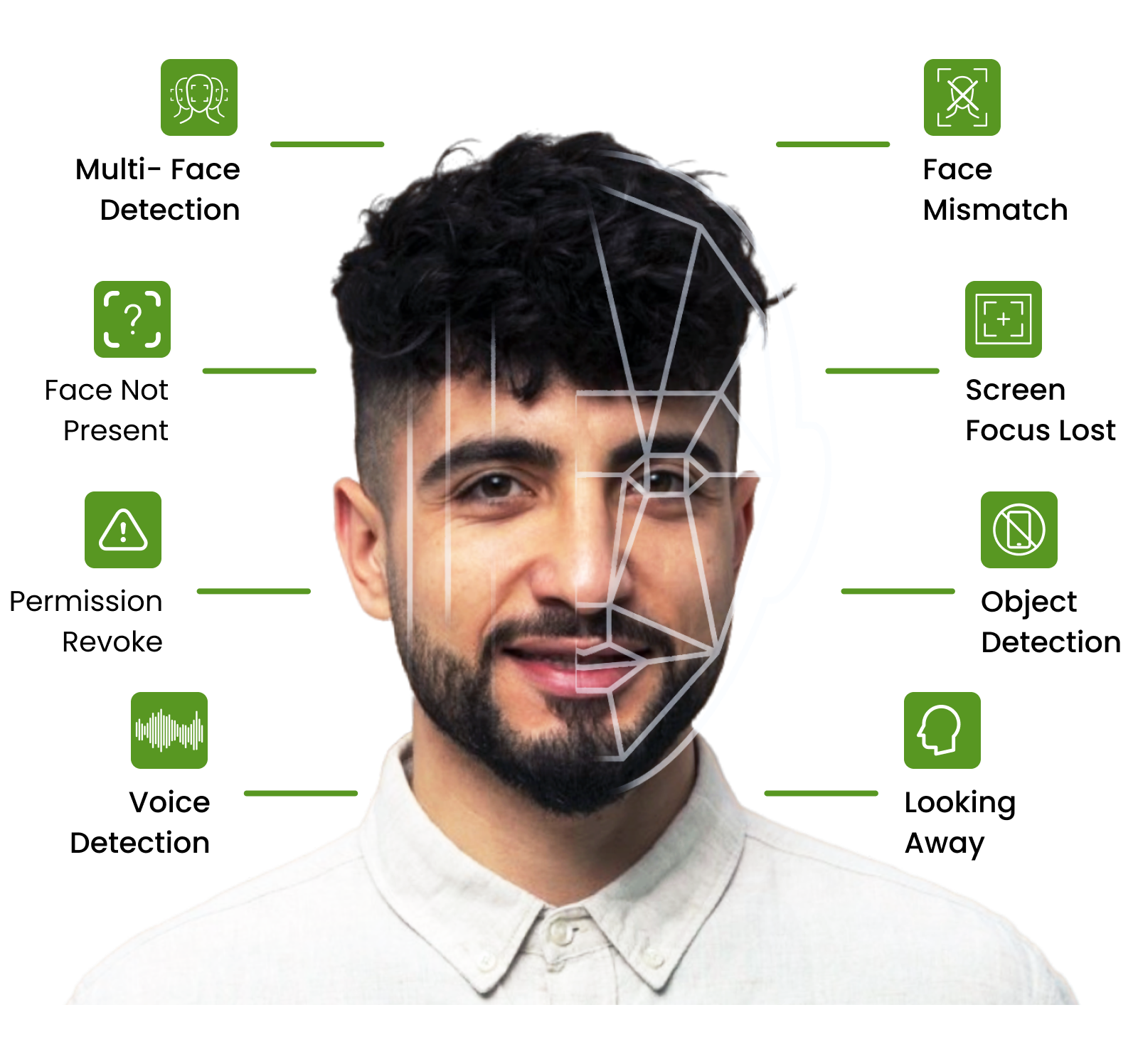
9 UFMs (Unique Fraud-proofing Mechanisms) — the security pillars of Think Proctor
- Multi-Face Detection – essential for online proctoring software
- Face Not Present
- Permission Revoke
- Voice Detection
- Face Mismatch
- Screen Focus Lost
- Object Detection
- Looking Away
- Voice Muted
The Think Proctor AI Journey — step-by-step (from candidate sign-in to audit)
-
Pre-Exam: Registration & Verification
-
Pre-Exam Environment Scan (360°)
-
Pre-Start: Device, Browser & Permission Lockdown
-
Live Monitoring During the Exam
-
Intervention and Course Correction during Time
-
Randomized Virtual Frisking and Micro-Checks
-
Hybrid Proctor Workflow
-
Post-Exam: Audit and Reporting
Secure Browser: Creating a Tamper-Proof Exam Environment
To design the most secure proctoring test and online proctored exam systems, even ai proctoring software must offer at least a few of these basic characteristics as controlling the candidate’s machine (tablet or laptop). Key Features of Secure Browser:- Kiosk Feature to prevent multitasking during test proctoring
- Allow Websites and Applications while retaining strict online proctoring control
- Restrict Screen Sharing to protect online remote proctoring integrity
- Cross-OS compatibility for global exam invigilation software usage
- Built-in Firewall to block VPNs for fair proctoring tool deployment
Why Secure Browser Is Essential for Exam Integrity
- Protects Question Banks from webcam proctoring leaks
- Ensures equal fairness in every proctoring test
- Enables AI-based test proctoring to focus on behavioral cues
- Supports all exams from MCQs to coding assessments in online proctored exam environments
- Locks down AI tools like ChatGPT in any online proctoring software setup
FAQ:
Transforming Assessments for the future